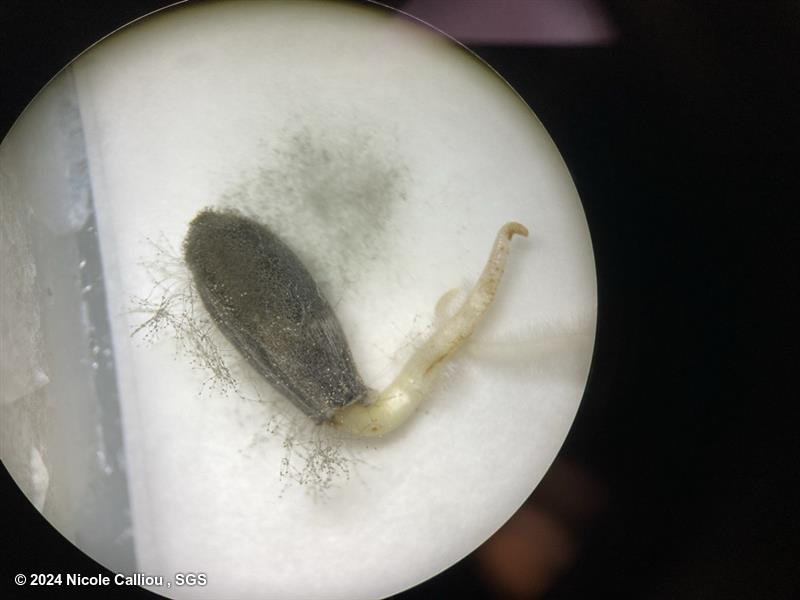
Botrytis cinerea on Helianthus annuus
Image credits: Nicole Calliou , FR
Abundant ash-grey mycelium, with tape-like mycelium producing bunches of conidiophores, clustered like grapes
sterilisation: None N/A | growth time: 7 days | temperature: 21C | lighting: Darkness | plate size: 4" x 4" box | agar: Blotter paper moistened with water ( N/A) |
DNA testing: None
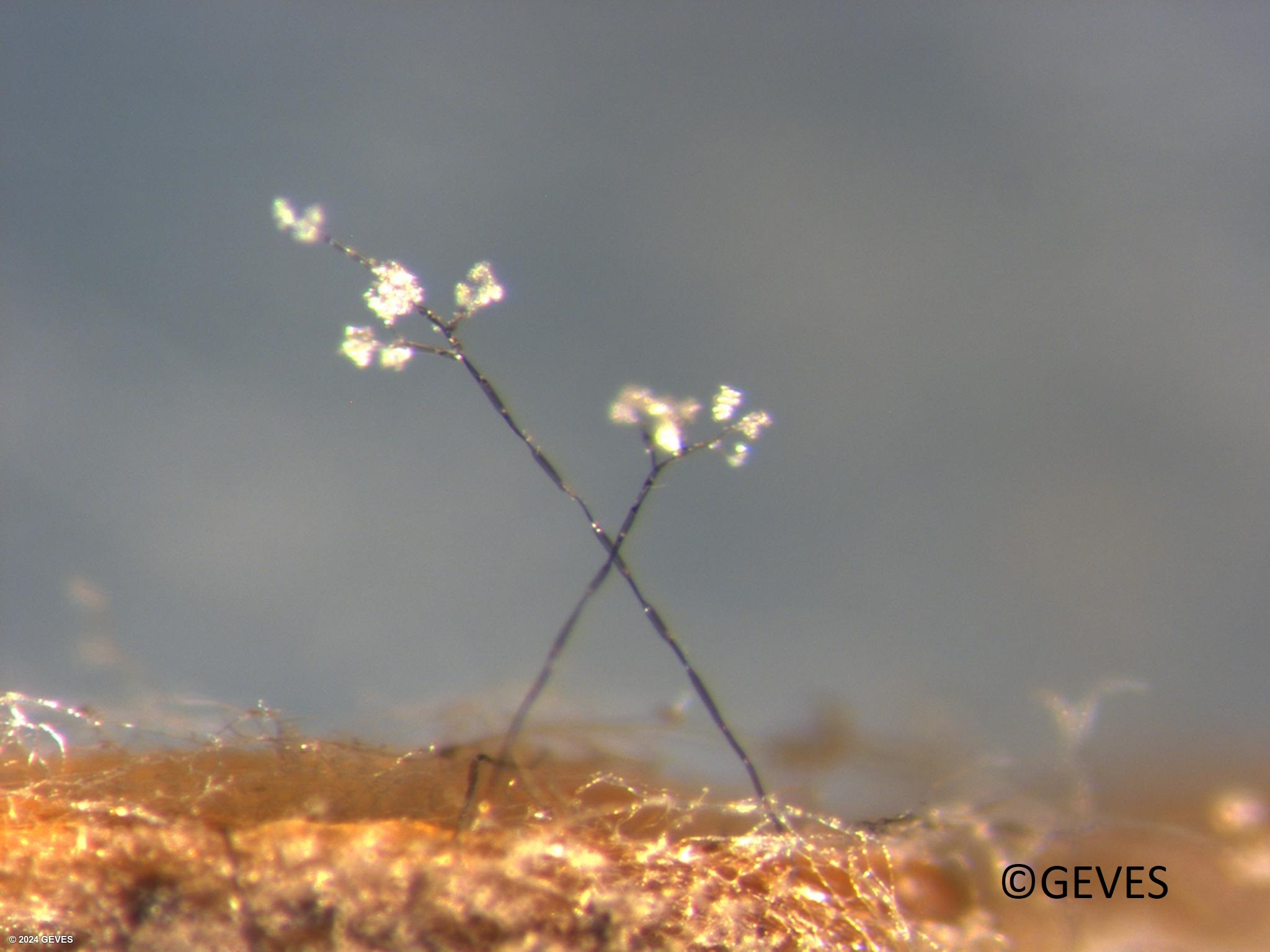
Botrytis cinerea on Helianthus annuus
Image credits: GEVES, FR
1) Isolated conidiophores of Botrytis cinerea 2) Conidiophores and conidia of Botrytis cinerea
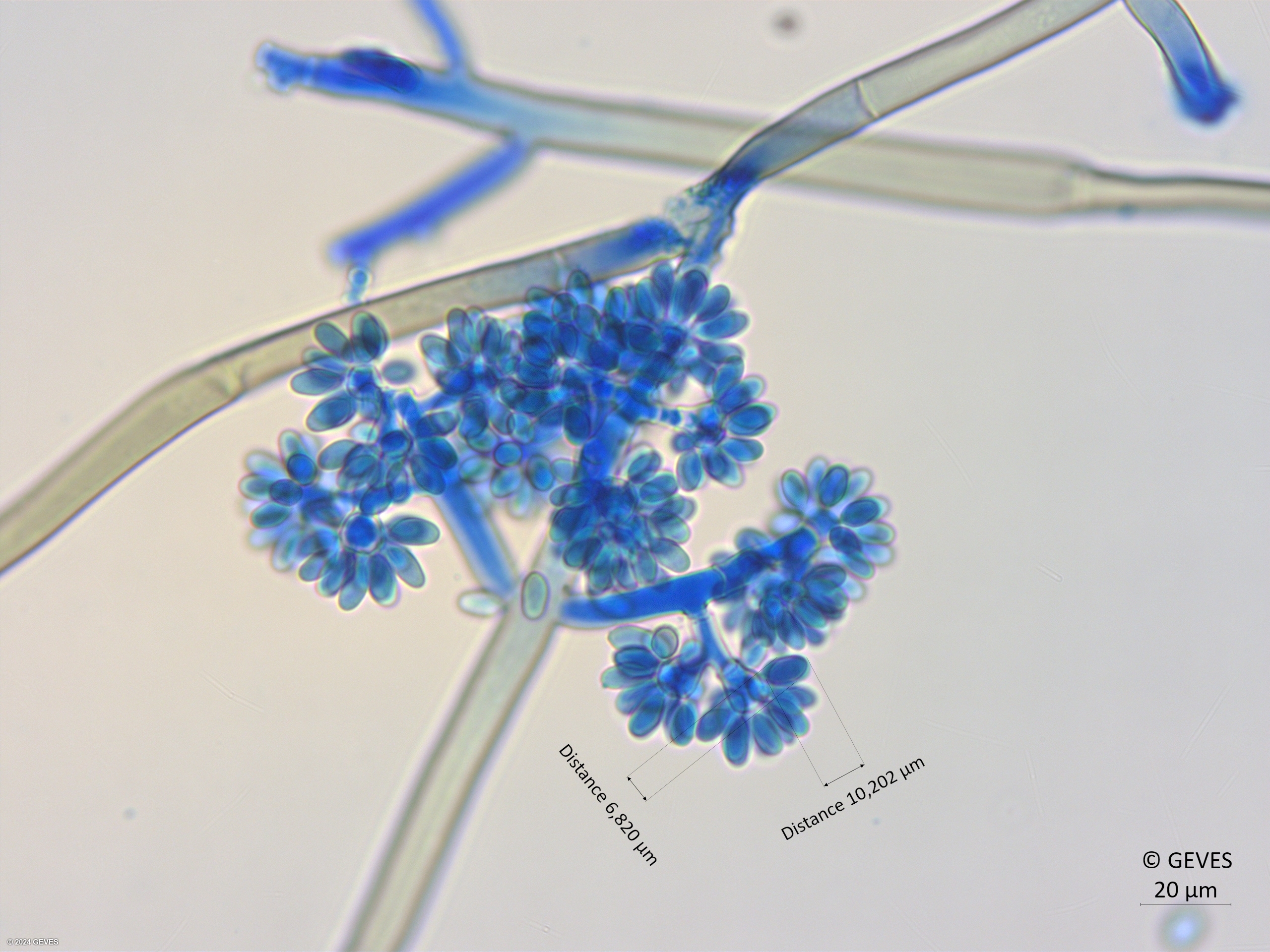
Botrytis cinerea on Helianthus annuus
Image credits: GEVES, FR
1) Isolated conidiophores of Botrytis cinerea 2) Conidiophores and conidia of Botrytis cinerea
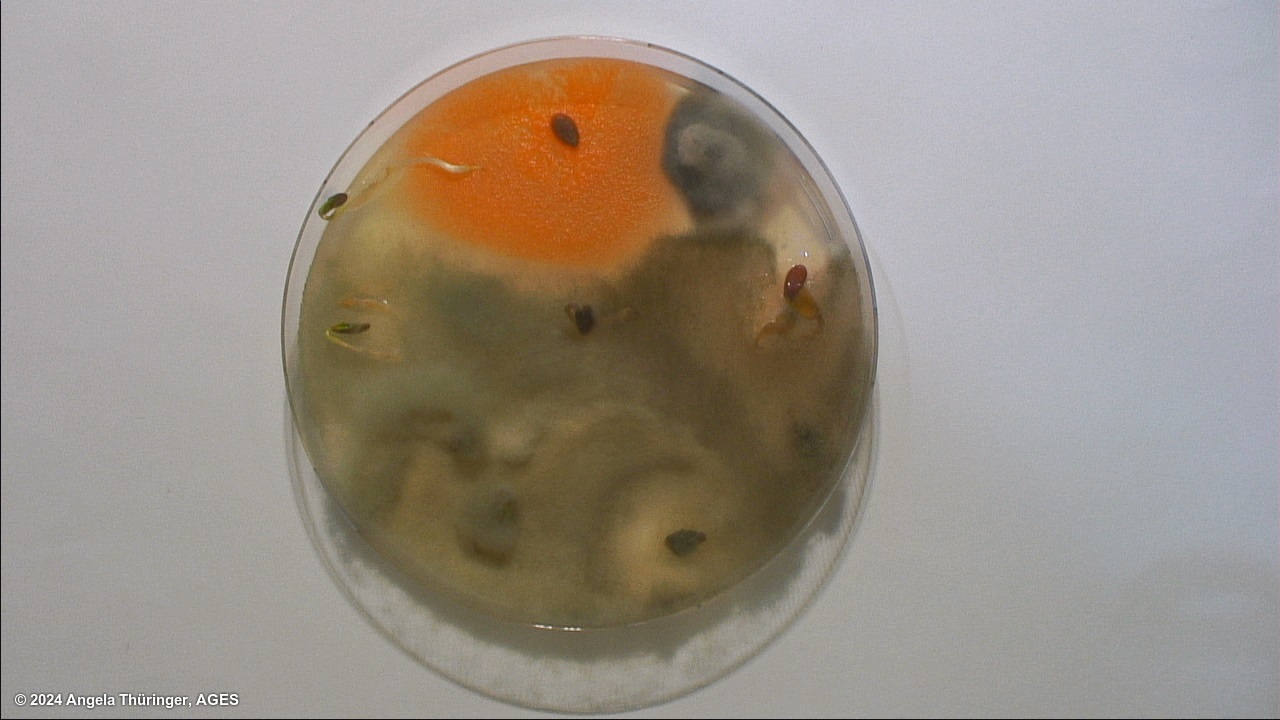
Botrytis cinerea on Linum usitassimum
Image credits: Angela Thüringer, 0
The first image shows a Botrytis cinerea colony (big grey and airy colony) on Flax, accompanied by Colletotrichum linum (orange) and Alternaria linicola (small grey colony). The other two images only show Botrytis cinerea on Flax.
growth time: 9 days | temperature: 20 +/-2C | lighting: darkness | plate size: 90mm | agar: PDA ( Merck)
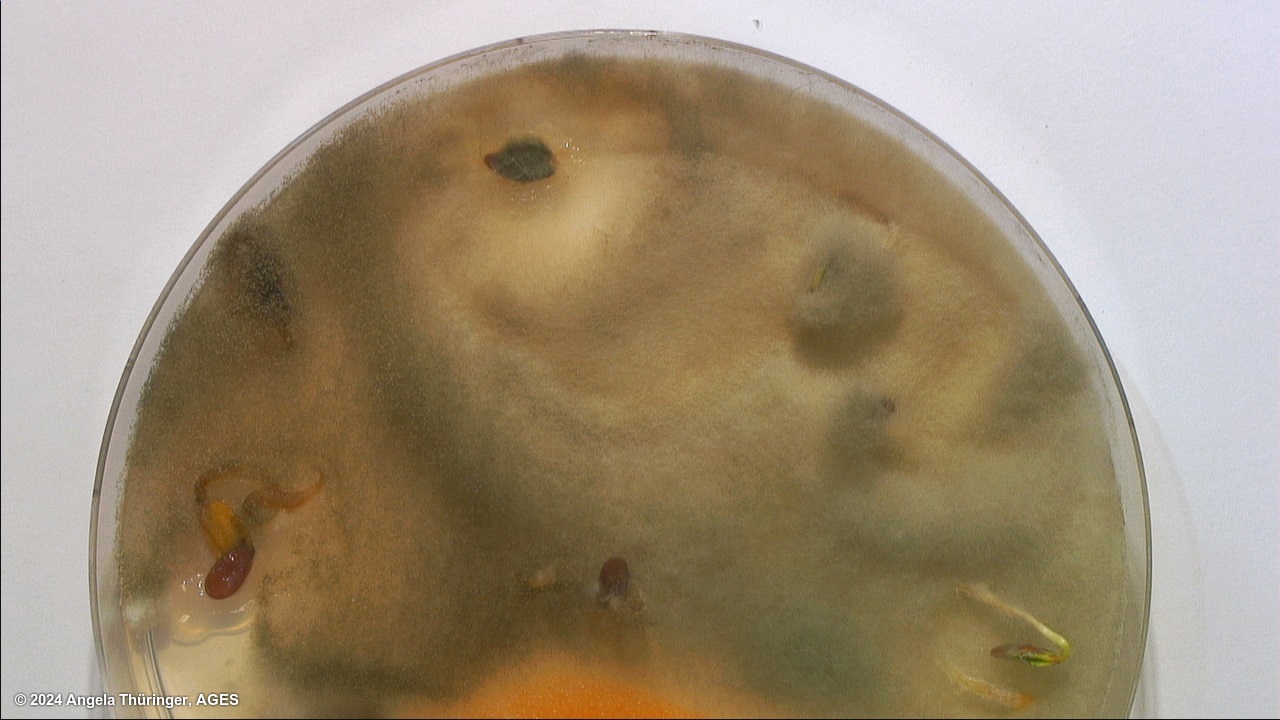
Botrytis cinerea on Linum usitassimum
Image credits: Angela Thüringer, 0
The first image shows a Botrytis cinerea colony (big grey and airy colony) on Flax, accompanied by Colletotrichum linum (orange) and Alternaria linicola (small grey colony). The other two images only show Botrytis cinerea on Flax.
growth time: 9 days | temperature: 20 +/-2C | lighting: darkness | plate size: 90mm | agar: PDA ( Merck)
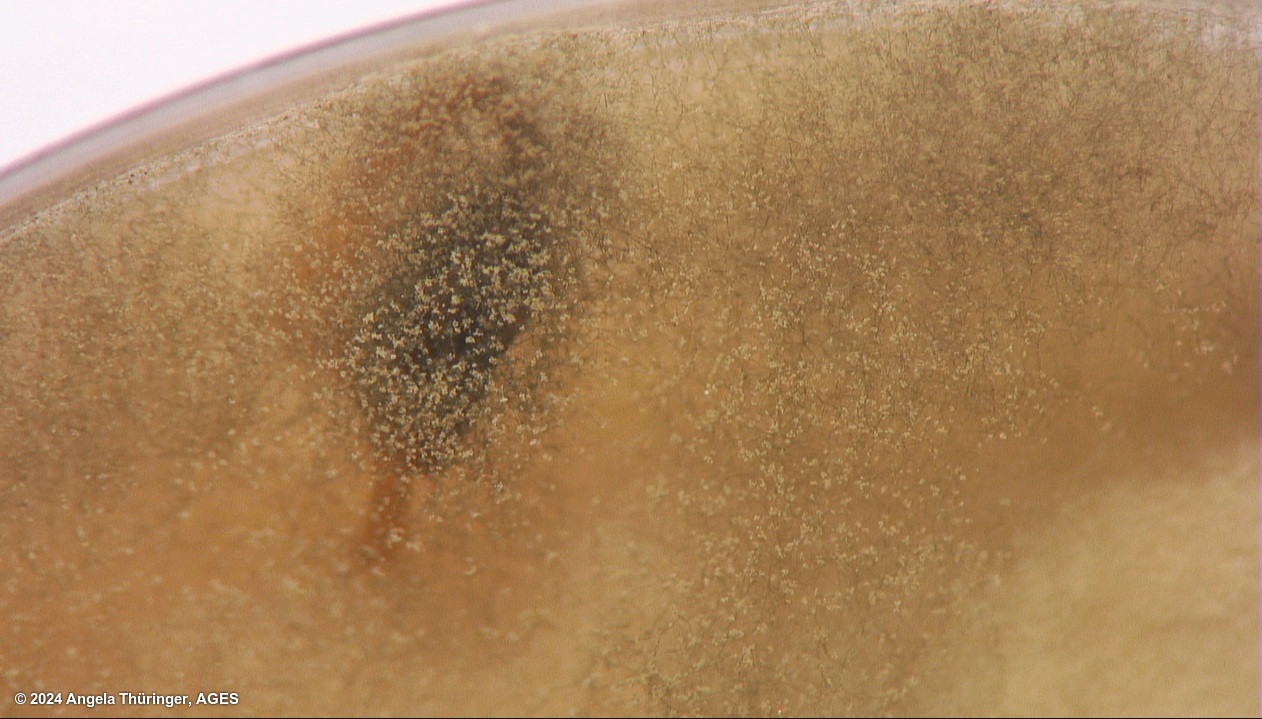
Botrytis cinerea on Linum usitassimum
Image credits: Angela Thüringer, 0
The first image shows a Botrytis cinerea colony (big grey and airy colony) on Flax, accompanied by Colletotrichum linum (orange) and Alternaria linicola (small grey colony). The other two images only show Botrytis cinerea on Flax.
growth time: 9 days | temperature: 20 +/-2C | lighting: darkness | plate size: 90mm | agar: PDA ( Merck)
Botrytis cinerea on Lens culinaris
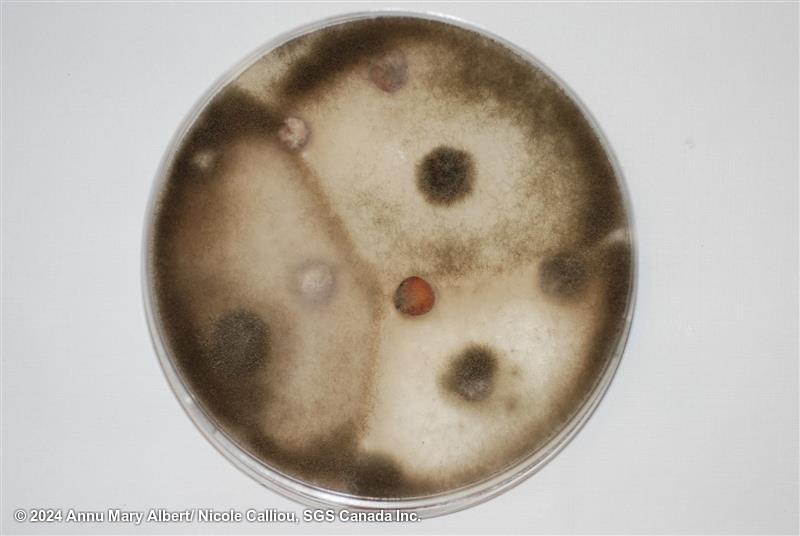
Image credits: Annu Mary Albert/ Nicole Calliou, CA
Figure 1 shows 3 fluffy grey Botrytis colonies with clusters on the end of the mycelium resembling clusters of grapes Figure 2 shows the back end of the above colonies. Figure 3 shows conidia under a dissecting scope. The grape like clusters are visible. Figure 4 shows conidia under the light microscope
sterilisation: 1% sodium hypochlorite (bleach) 4 minutes | growth time: 7 days | temperature: 25+/- 2C | lighting: 3:1 flourescent: NUV for 12 hours alternating with 12 hours darkness | plate size: 90 mm | agar: PDA ( Neogen) |
DNA testing: N/A
Botrytis cinerea on Lens culinaris
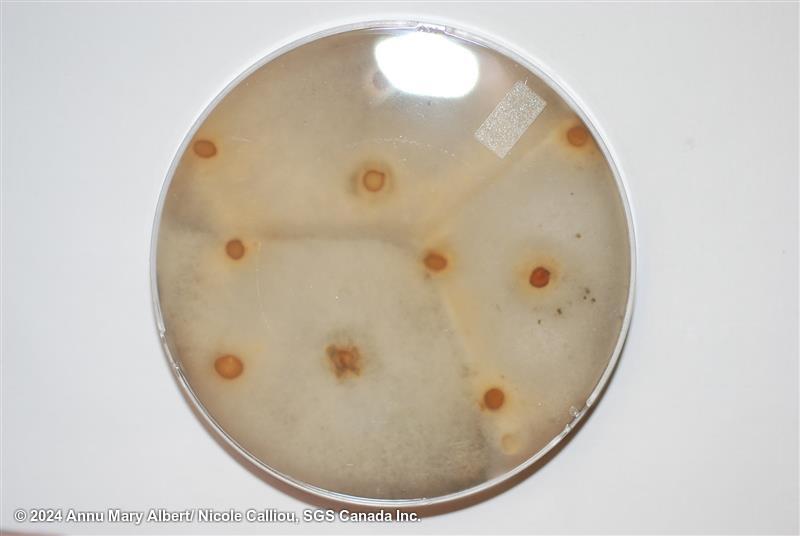
Image credits: Annu Mary Albert/ Nicole Calliou, CA
Figure 1 shows 3 fluffy grey Botrytis colonies with clusters on the end of the mycelium resembling clusters of grapes Figure 2 shows the back end of the above colonies. Figure 3 shows conidia under a dissecting scope. The grape like clusters are visible. Figure 4 shows conidia under the light microscope
sterilisation: 1% sodium hypochlorite (bleach) 4 minutes | growth time: 7 days | temperature: 25+/- 2C | lighting: 3:1 flourescent: NUV for 12 hours alternating with 12 hours darkness | plate size: 90 mm | agar: PDA ( Neogen) |
DNA testing: N/A
Botrytis cinerea on Lens culinaris
Image credits: Annu Mary Albert/ Nicole Calliou, CA
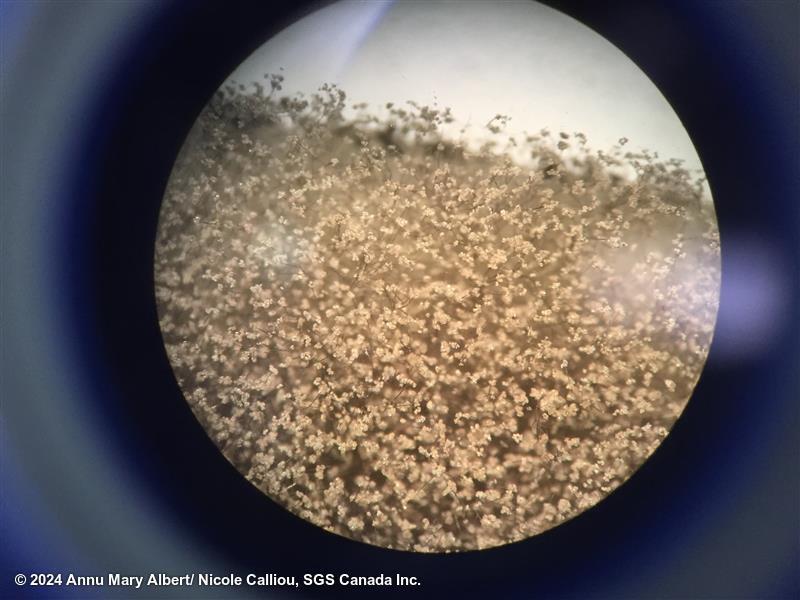
Figure 1 shows 3 fluffy grey Botrytis colonies with clusters on the end of the mycelium resembling clusters of grapes Figure 2 shows the back end of the above colonies. Figure 3 shows conidia under a dissecting scope. The grape like clusters are visible. Figure 4 shows conidia under the light microscope
sterilisation: 1% sodium hypochlorite (bleach) 4 minutes | growth time: 7 days | temperature: 25+/- 2C | lighting: 3:1 flourescent: NUV for 12 hours alternating with 12 hours darkness | plate size: 90 mm | agar: PDA ( Neogen) |
DNA testing: N/A
Botrytis cinerea on Lens culinaris
Image credits: Annu Mary Albert/ Nicole Calliou, CA
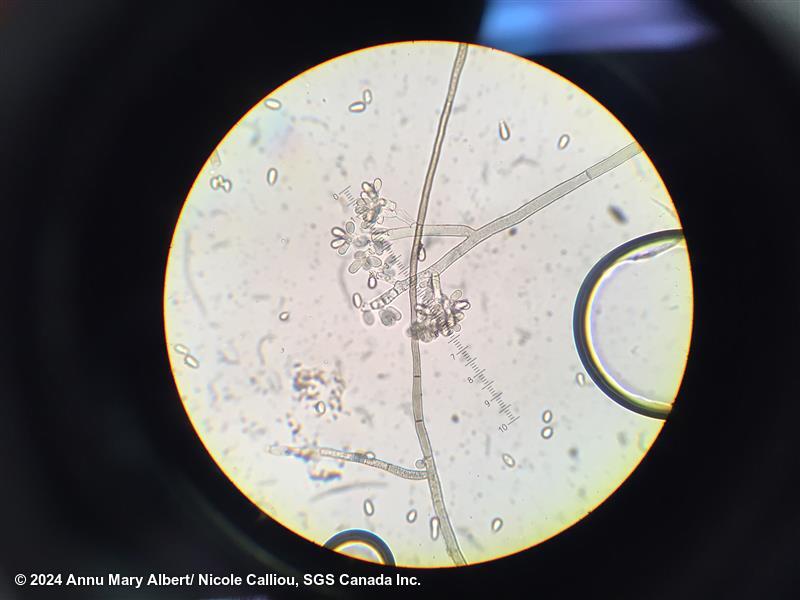
Figure 1 shows 3 fluffy grey Botrytis colonies with clusters on the end of the mycelium resembling clusters of grapes Figure 2 shows the back end of the above colonies. Figure 3 shows conidia under a dissecting scope. The grape like clusters are visible. Figure 4 shows conidia under the light microscope
sterilisation: 1% sodium hypochlorite (bleach) 4 minutes | growth time: 7 days | temperature: 25+/- 2C | lighting: 3:1 flourescent: NUV for 12 hours alternating with 12 hours darkness | plate size: 90 mm | agar: PDA ( Neogen) |
DNA testing: N/A
Botrytis cinerea on Helianthus annuus
Image credits: AGES/ Angela Thüringer, AT
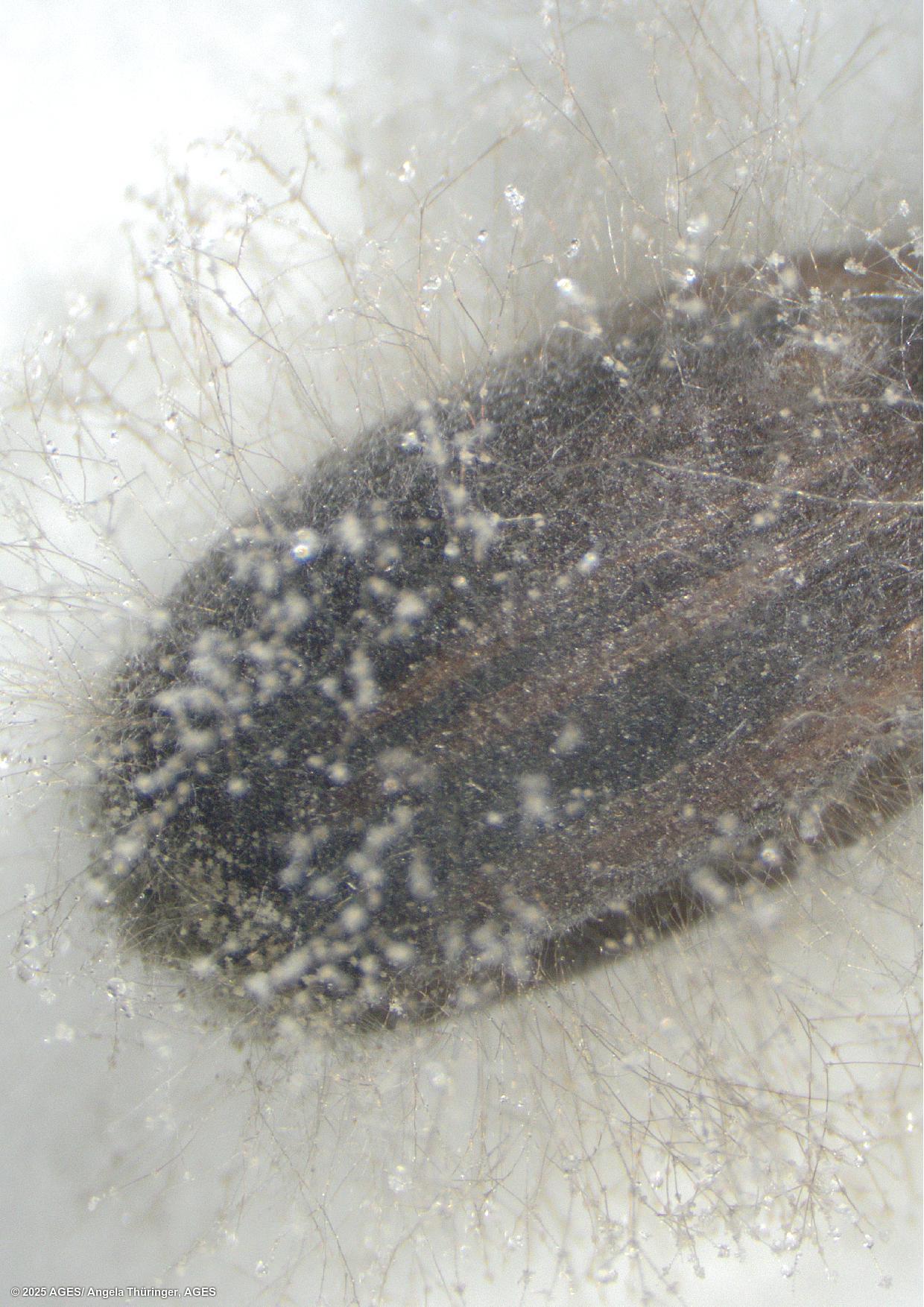
Typical tape-like dark grey mycelium producing bunches of white conidiophores, clustered like grapes.
sterilisation: None | growth time: 7 days | temperature: 20 +/-2C° | lighting: Darkness | agar: Blotter paper moistened with deionised water ( ) |
DNA testing: No
Botrytis cinerea on Helianthus annuus
Image credits: AGES/ Angela Thüringer, AT
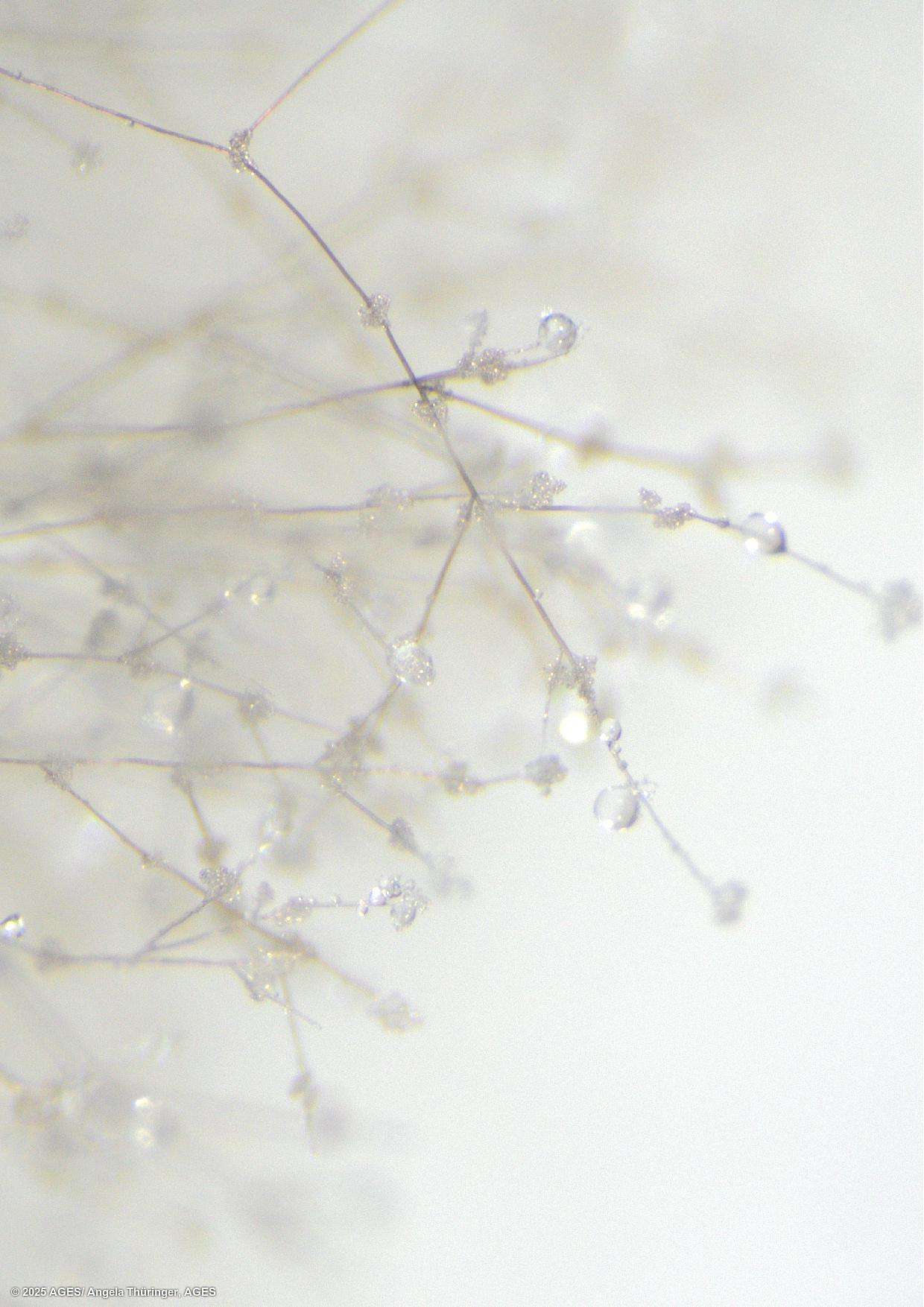
Typical tape-like dark grey mycelium producing bunches of white conidiophores, clustered like grapes.
sterilisation: None | growth time: 7 days | temperature: 20 +/-2C° | lighting: Darkness | agar: Blotter paper moistened with deionised water ( ) |
DNA testing: No
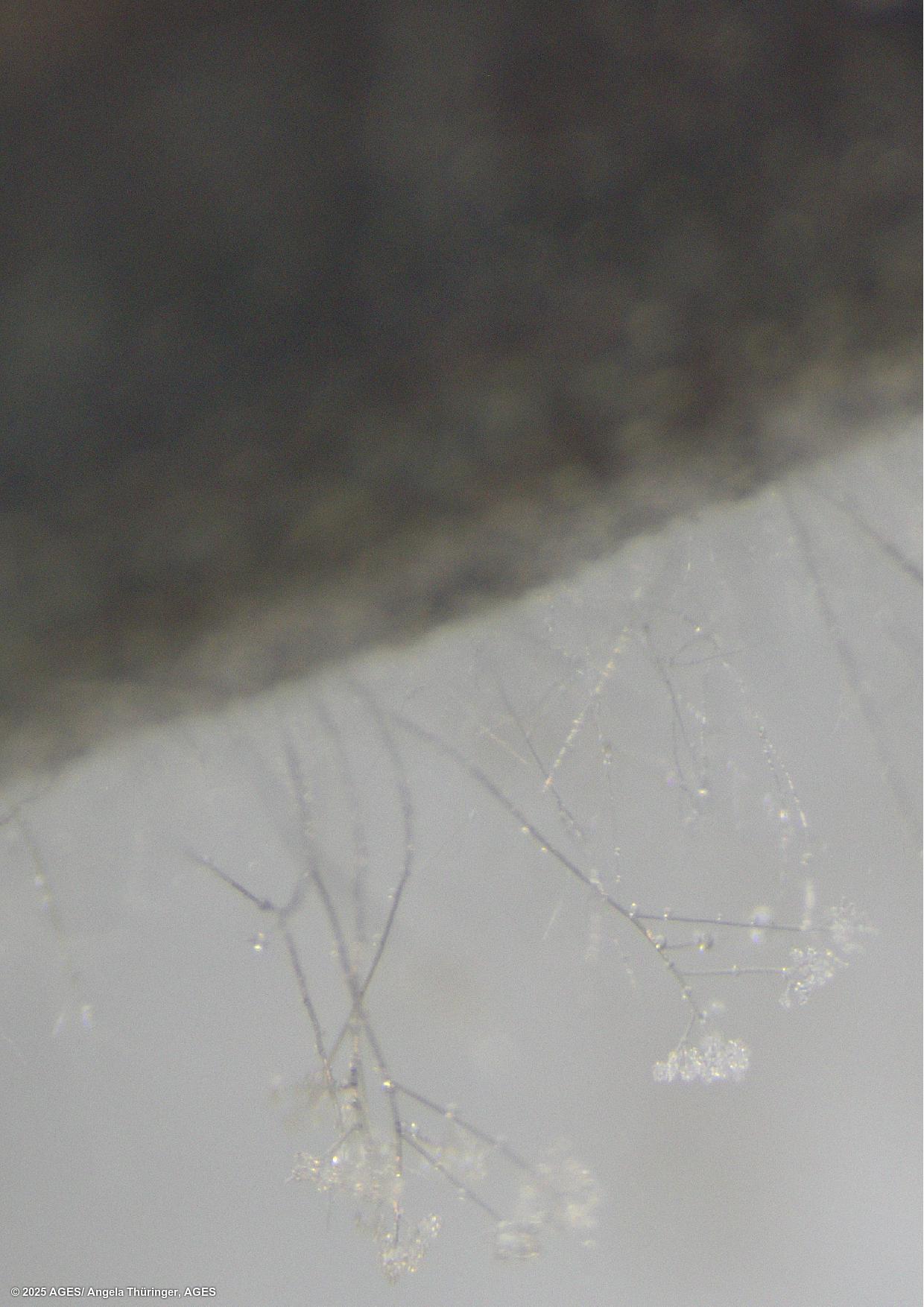
Botrytis cinerea on Helianthus annuus
Image credits: AGES/ Angela Thüringer, AT
Typical tape-like dark grey mycelium producing bunches of white conidiophores, clustered like grapes.
sterilisation: None | growth time: 7 days | temperature: 20 +/-2C° | lighting: Darkness | agar: Blotter paper moistened with deionised water ( ) |
DNA testing: No
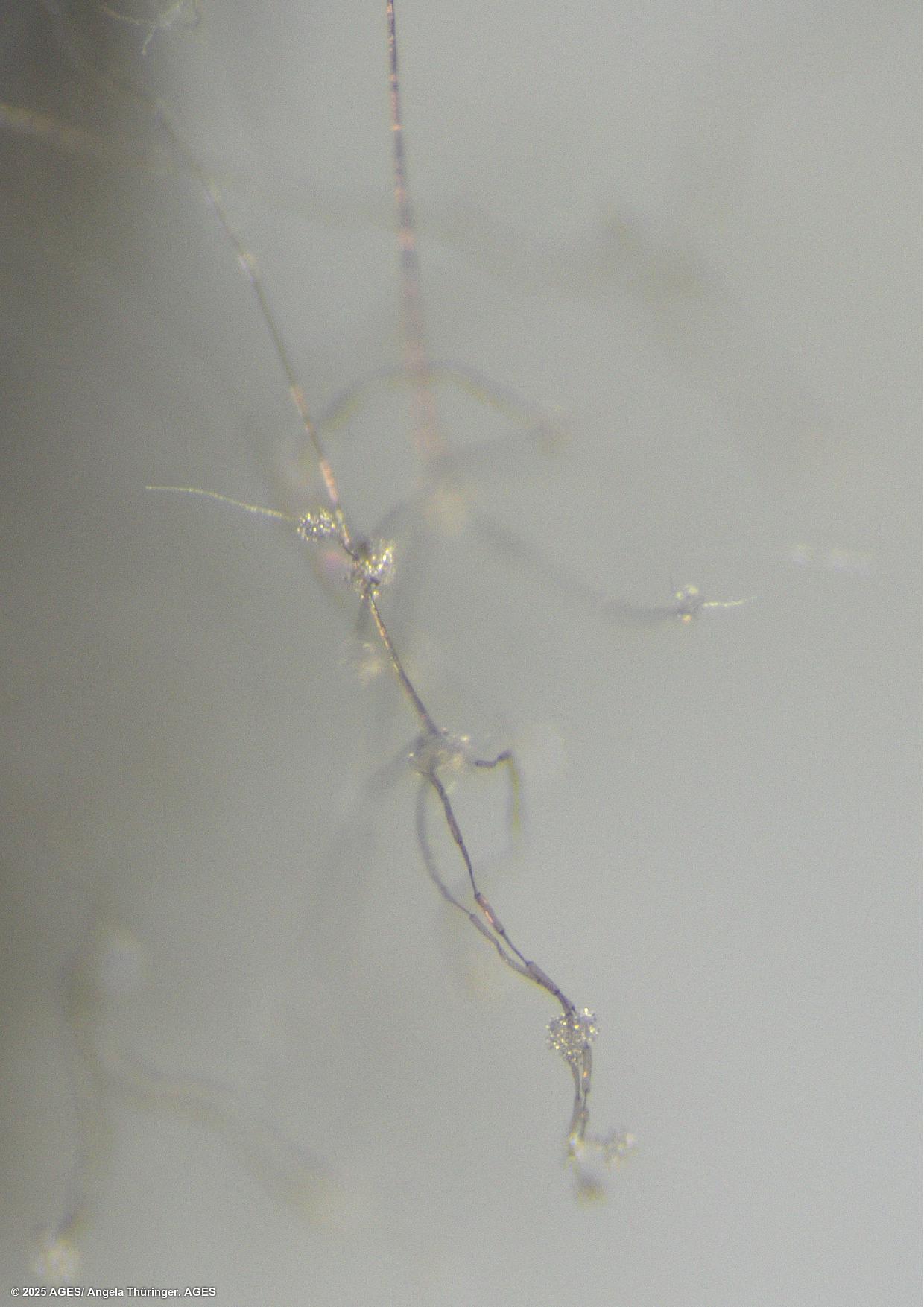
Botrytis cinerea on Helianthus annuus
Image credits: AGES/ Angela Thüringer, AT
Typical tape-like dark grey mycelium producing bunches of white conidiophores, clustered like grapes.
sterilisation: None | growth time: 7 days | temperature: 20 +/-2C° | lighting: Darkness | agar: Blotter paper moistened with deionised water ( ) |
DNA testing: No
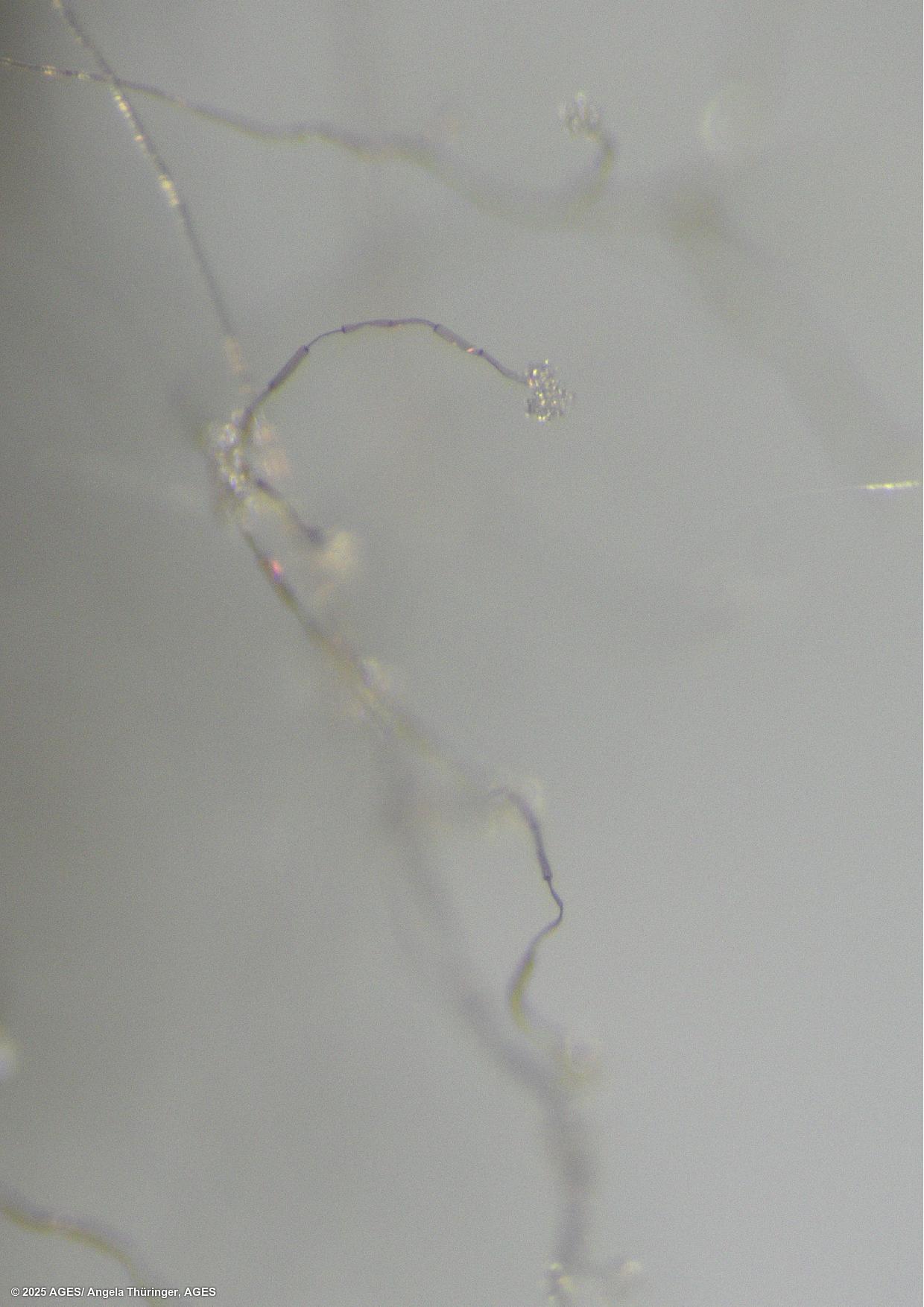
Botrytis cinerea on Helianthus annuus
Image credits: AGES/ Angela Thüringer, AT
Typical tape-like dark grey mycelium producing bunches of white conidiophores, clustered like grapes.
sterilisation: None | growth time: 7 days | temperature: 20 +/-2C° | lighting: Darkness | agar: Blotter paper moistened with deionised water ( ) |
DNA testing: No