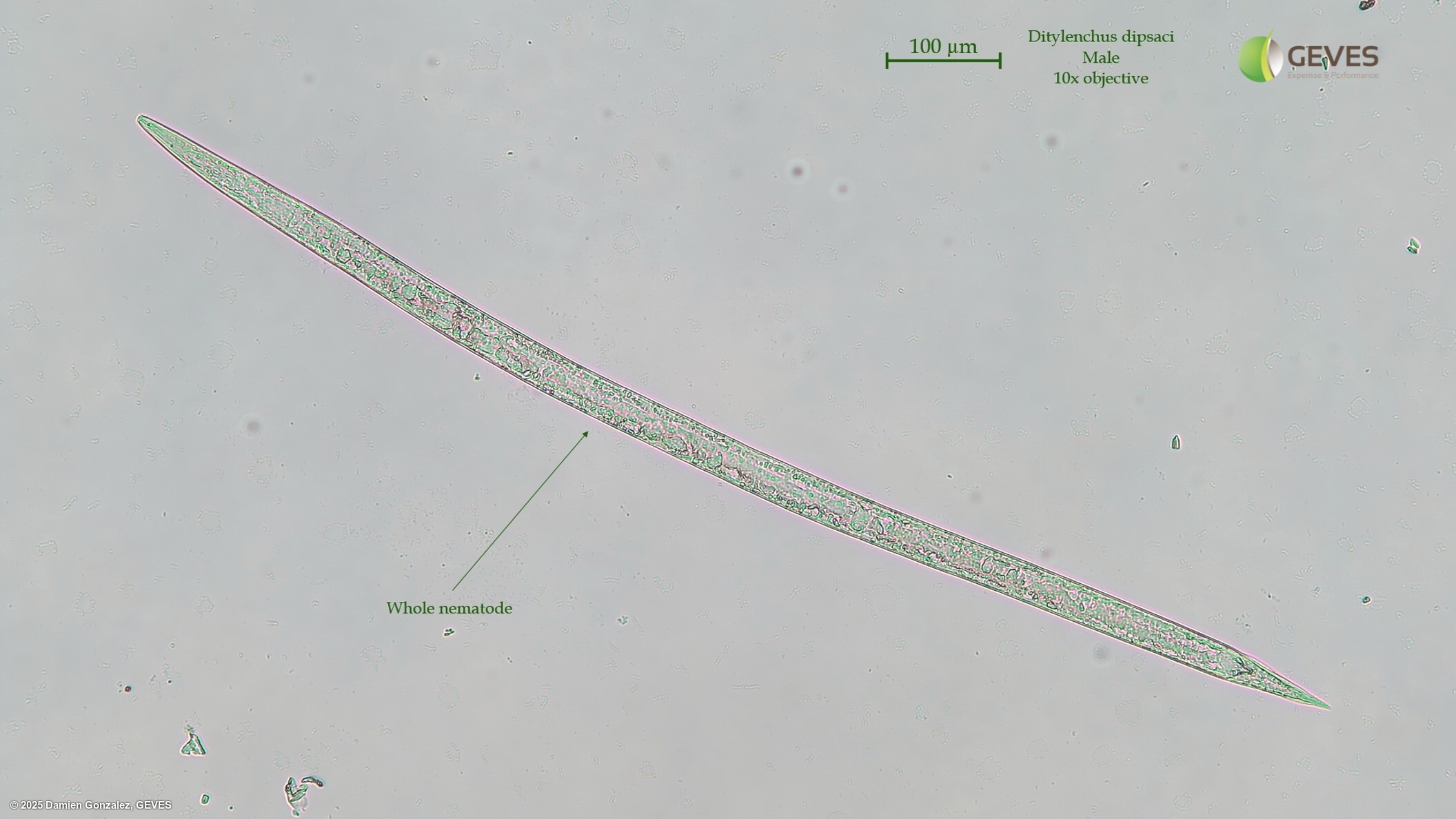
Ditylenchus dipsaci on Medicago sativa
Image credits: Damien Gonzalez, FR
The general criteria and observations are indicated directly on the photos. Here is a comprehensive list of the main characteristics for Ditylenchus dipsaci: - Length in mm: 1.0-1.3 - Head shape: « Offset » : narrower than adjoining body with lip region flattened - Stylet length in µm: 10-12 - Nerve ring behind the muscular median bulb - Excretory pore behind the nerve ring - Length of the bursa : ¾ of tail length - Number of lateral lines: 4 - Shape of tail: Conical and pointed
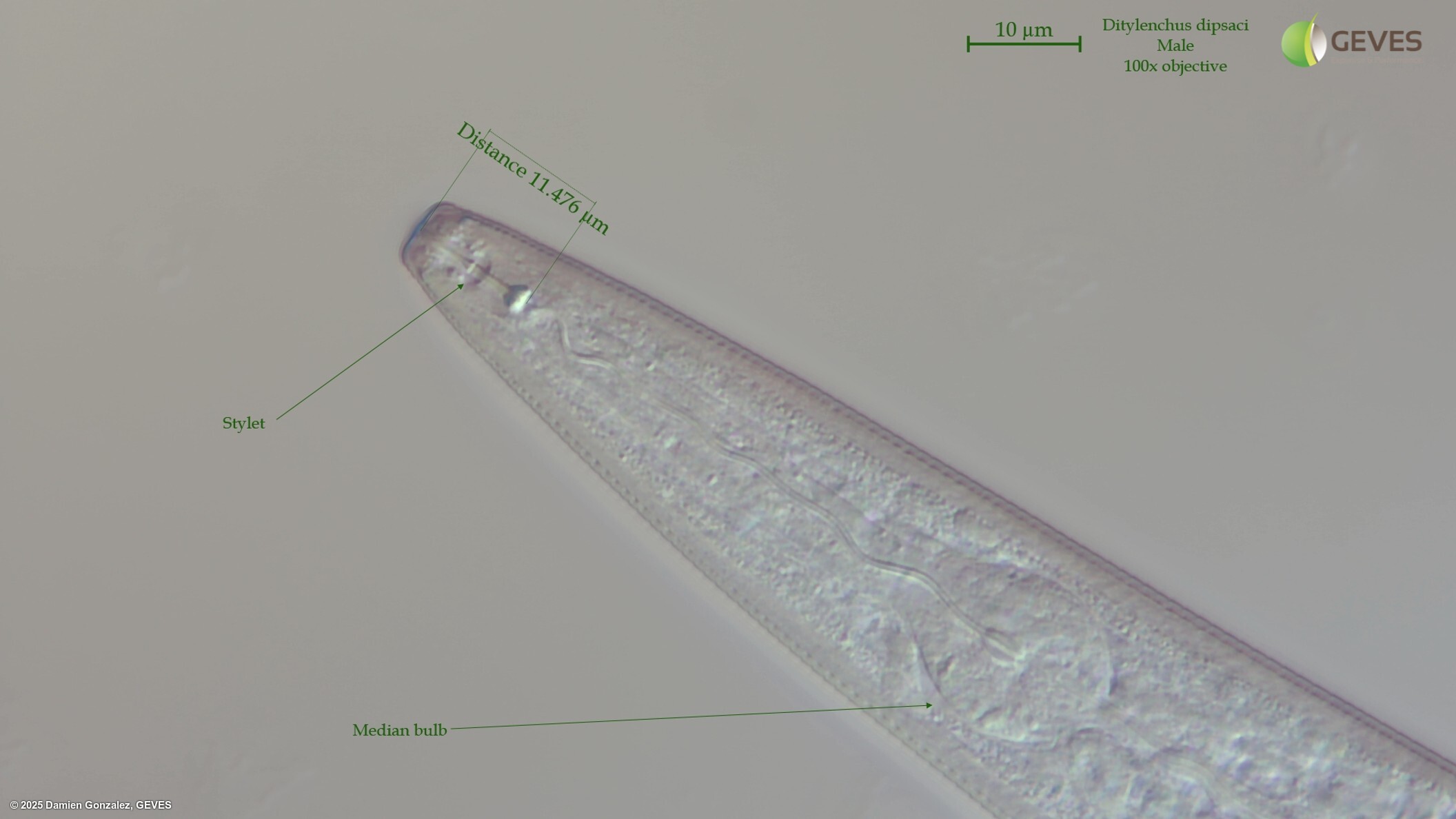
Ditylenchus dipsaci on Medicago sativa
Image credits: Damien Gonzalez, FR
The general criteria and observations are indicated directly on the photos. Here is a comprehensive list of the main characteristics for Ditylenchus dipsaci: - Length in mm: 1.0-1.3 - Head shape: « Offset » : narrower than adjoining body with lip region flattened - Stylet length in µm: 10-12 - Nerve ring behind the muscular median bulb - Excretory pore behind the nerve ring - Length of the bursa : ¾ of tail length - Number of lateral lines: 4 - Shape of tail: Conical and pointed
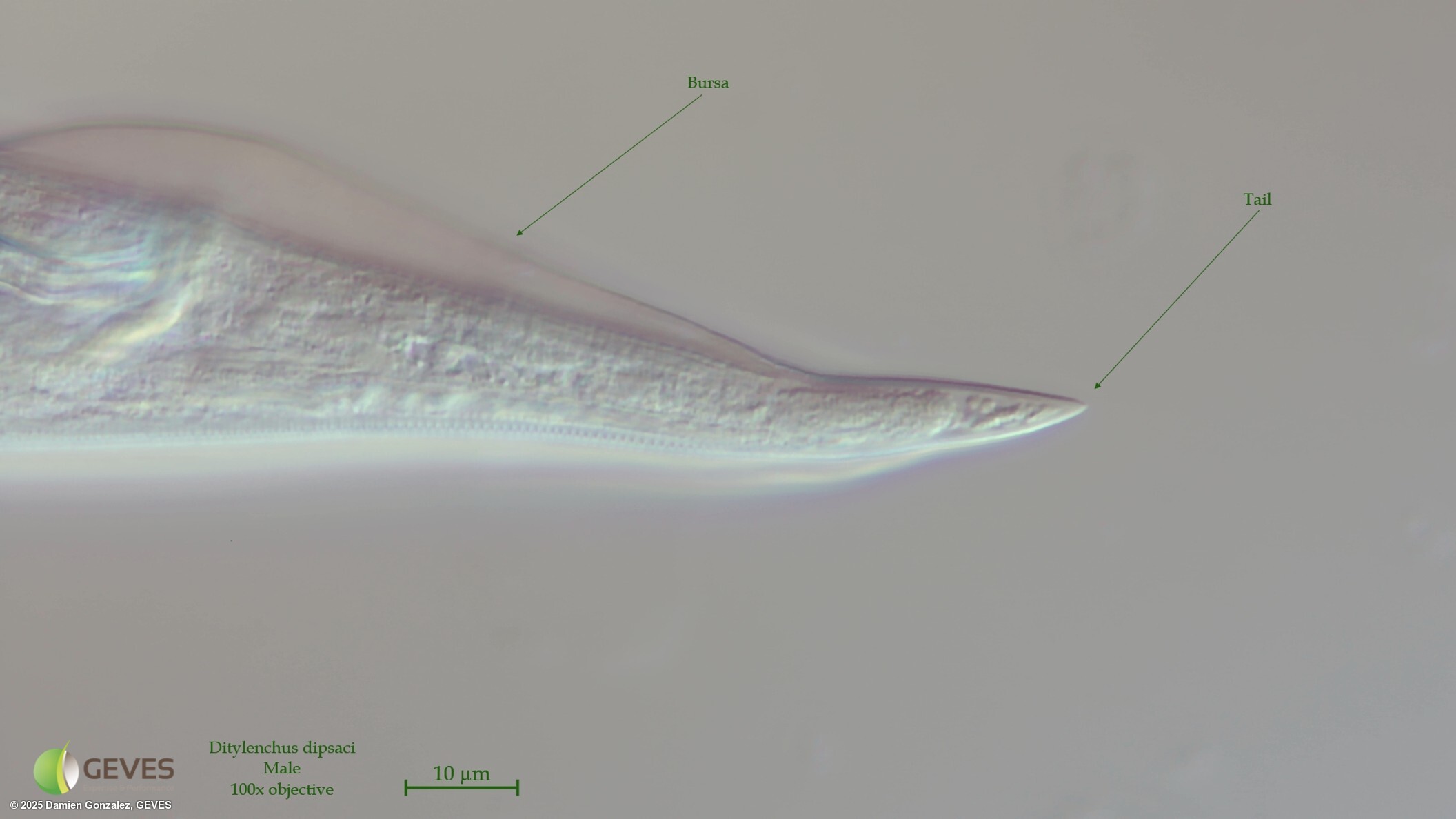
Ditylenchus dipsaci on Medicago sativa
Image credits: Damien Gonzalez, FR
The general criteria and observations are indicated directly on the photos. Here is a comprehensive list of the main characteristics for Ditylenchus dipsaci: - Length in mm: 1.0-1.3 - Head shape: « Offset » : narrower than adjoining body with lip region flattened - Stylet length in µm: 10-12 - Nerve ring behind the muscular median bulb - Excretory pore behind the nerve ring - Length of the bursa : ¾ of tail length - Number of lateral lines: 4 - Shape of tail: Conical and pointed
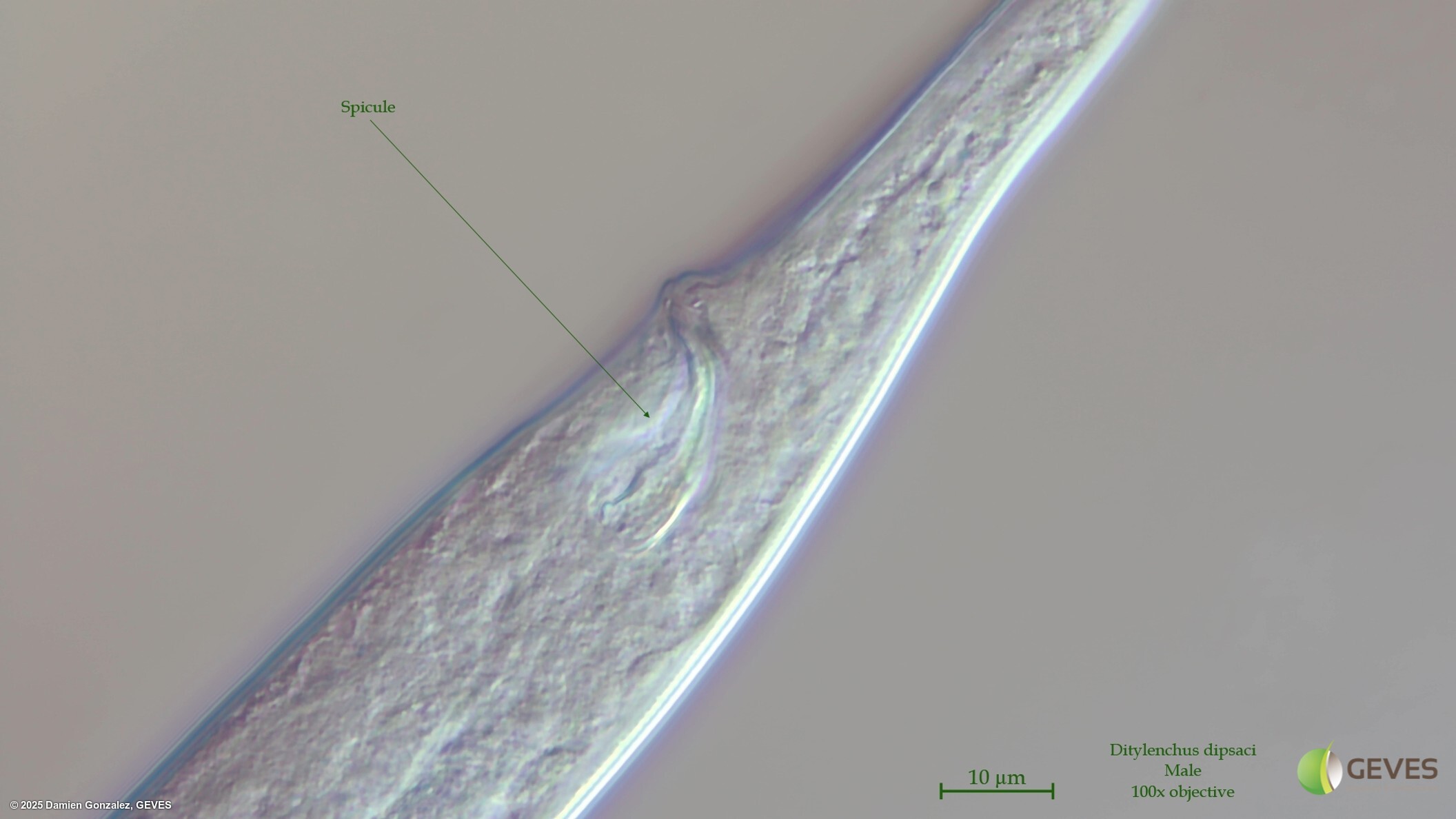
Ditylenchus dipsaci on Medicago sativa
Image credits: Damien Gonzalez, FR
The general criteria and observations are indicated directly on the photos. Here is a comprehensive list of the main characteristics for Ditylenchus dipsaci: - Length in mm: 1.0-1.3 - Head shape: « Offset » : narrower than adjoining body with lip region flattened - Stylet length in µm: 10-12 - Nerve ring behind the muscular median bulb - Excretory pore behind the nerve ring - Length of the bursa : ¾ of tail length - Number of lateral lines: 4 - Shape of tail: Conical and pointed
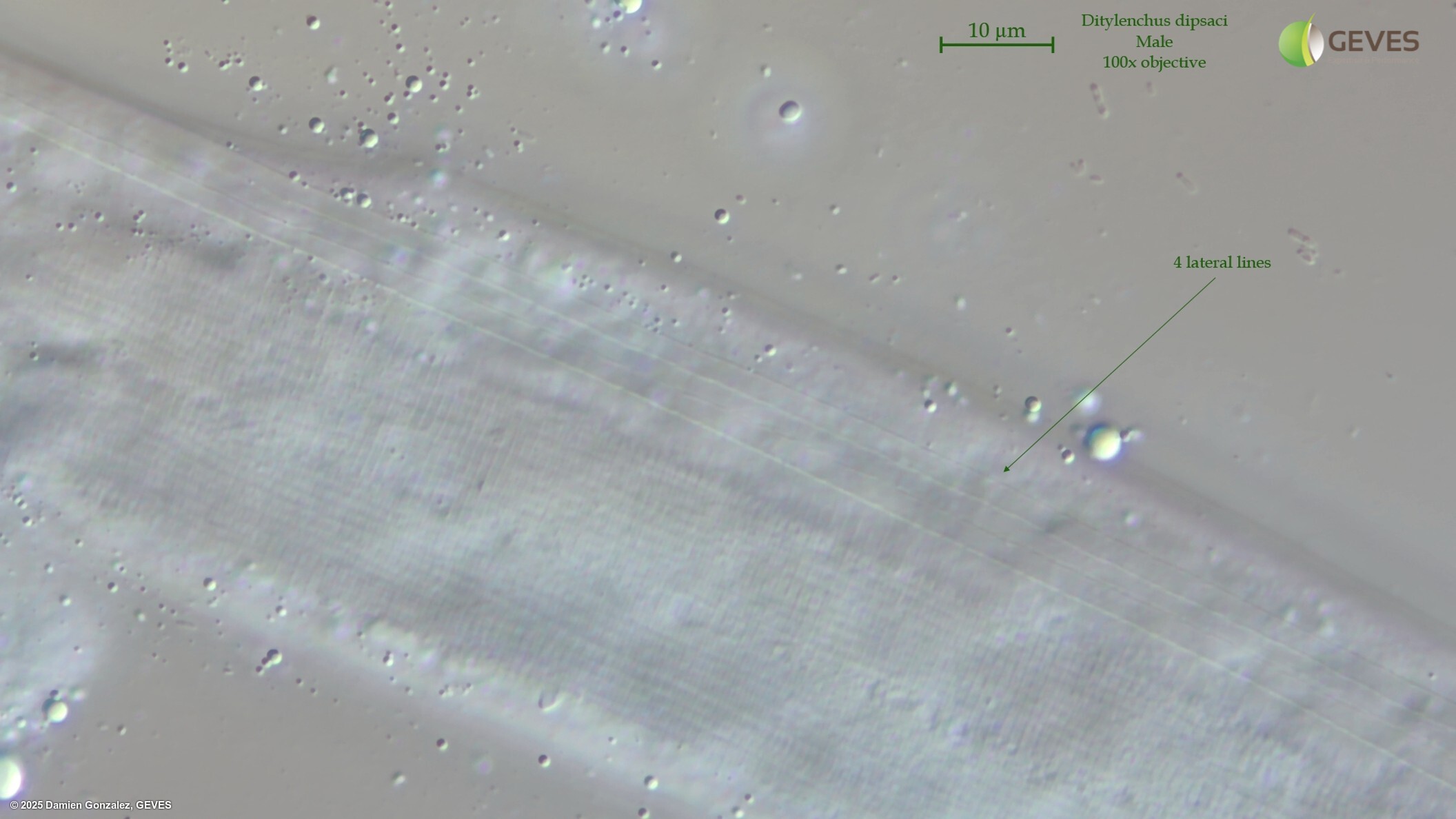
Ditylenchus dipsaci on Medicago sativa
Image credits: Damien Gonzalez, FR
The general criteria and observations are indicated directly on the photos. Here is a comprehensive list of the main characteristics for Ditylenchus dipsaci: - Length in mm: 1.0-1.3 - Head shape: « Offset » : narrower than adjoining body with lip region flattened - Stylet length in µm: 10-12 - Nerve ring behind the muscular median bulb - Excretory pore behind the nerve ring - Length of the bursa : ¾ of tail length - Number of lateral lines: 4 - Shape of tail: Conical and pointed
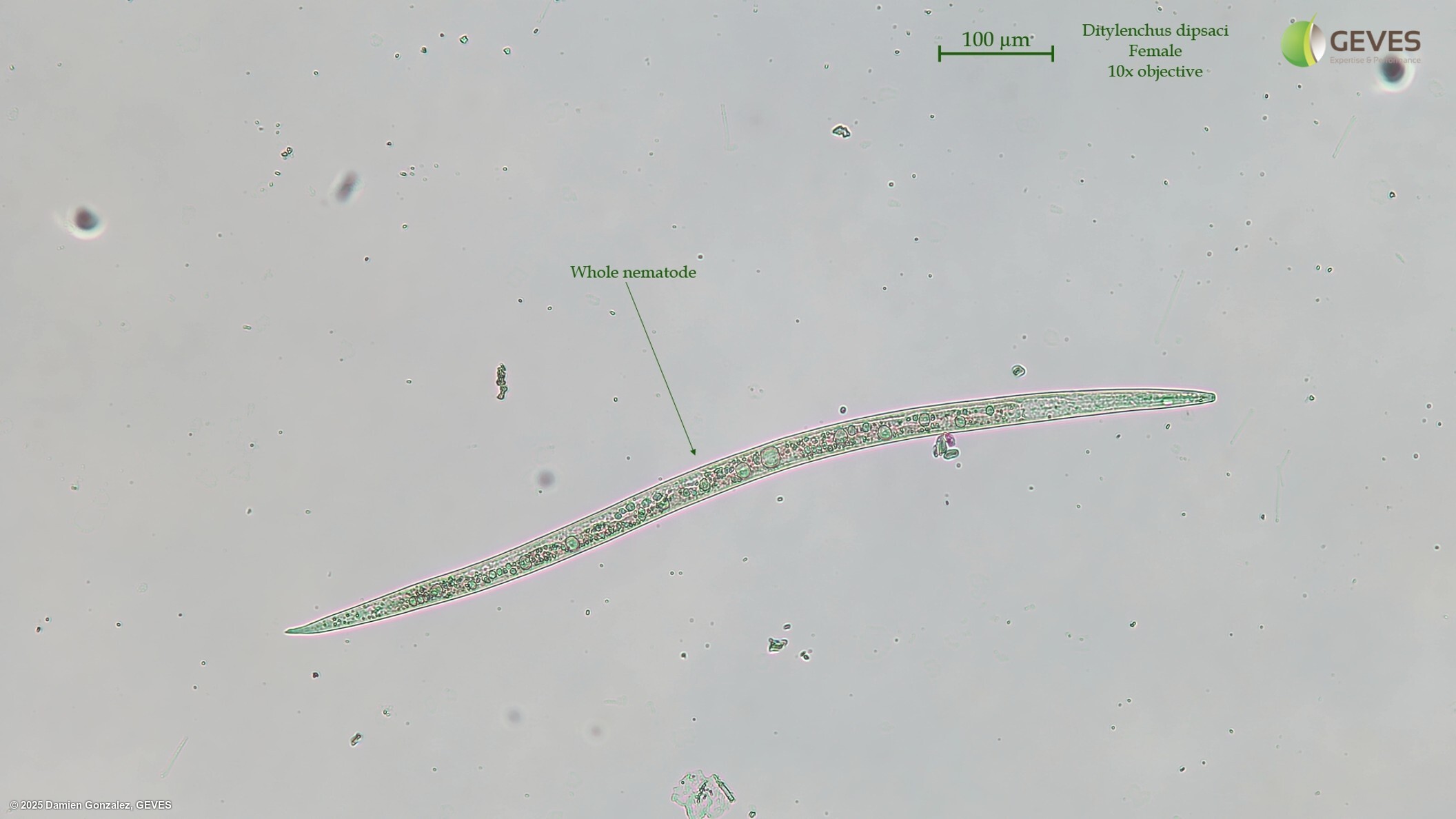
Ditylenchus dipsaci on Medicago sativa
Image credits: Damien Gonzalez, FR
The general criteria and observations are indicated directly on the photos. Here is a comprehensive list of the main characteristics for Ditylenchus dipsaci: - Length in mm: 1.0-1.3 - Head shape: « Offset » : narrower than adjoining body with lip region flattened - Stylet length in µm: 10-12 - Nerve ring behind the muscular median bulb - Excretory pore behind the nerve ring - Length of the post-vulval sac : 50% of the distance between the vulva and the anus - Position of the vulva relative to the anterior end, expressed as a % of the body length in female: 80 - Number of lateral lines: 4 - Shape of tail: Conical and pointed
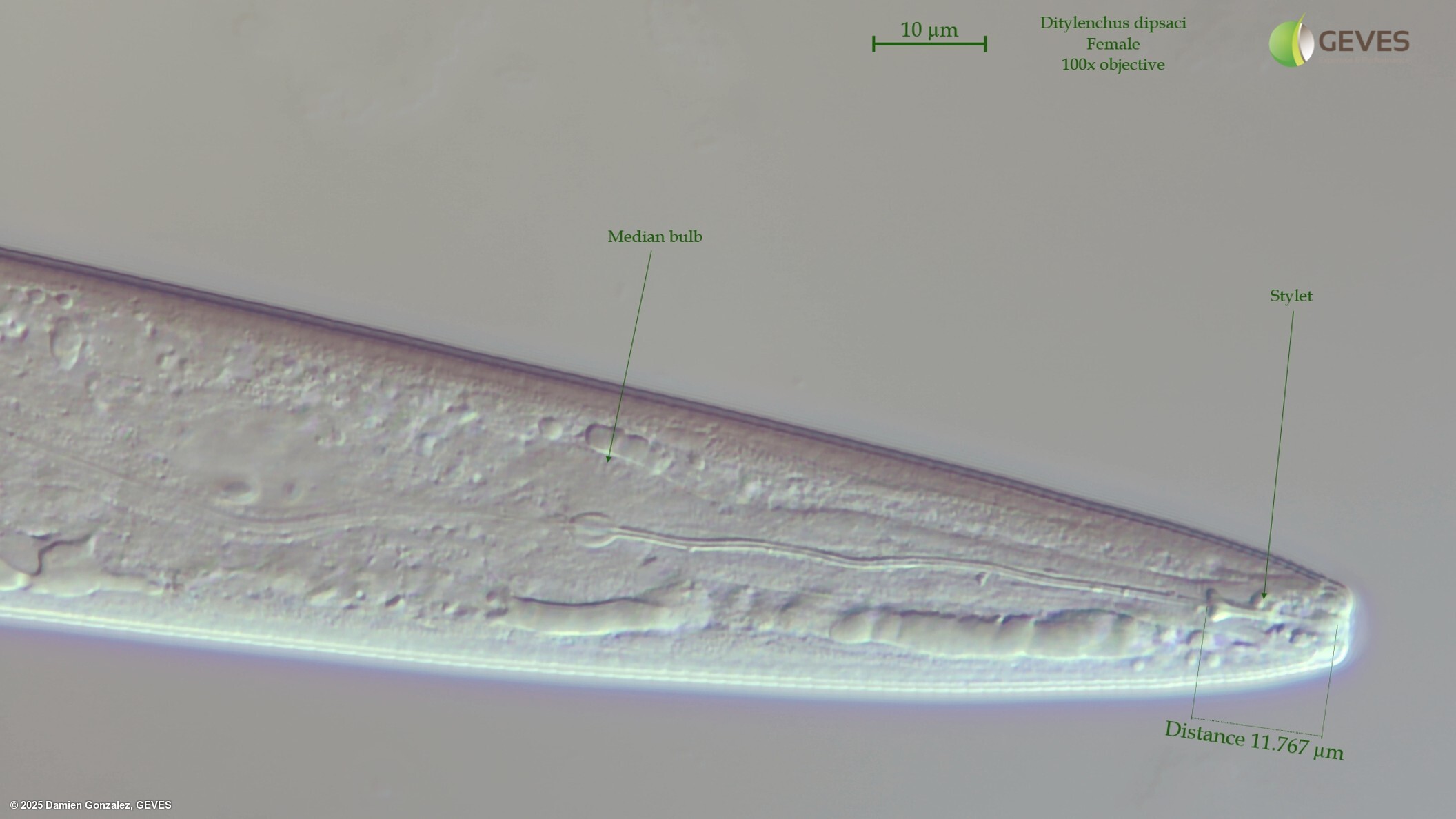
Ditylenchus dipsaci on Medicago sativa
Image credits: Damien Gonzalez, FR
The general criteria and observations are indicated directly on the photos. Here is a comprehensive list of the main characteristics for Ditylenchus dipsaci: - Length in mm: 1.0-1.3 - Head shape: « Offset » : narrower than adjoining body with lip region flattened - Stylet length in µm: 10-12 - Nerve ring behind the muscular median bulb - Excretory pore behind the nerve ring - Length of the post-vulval sac : 50% of the distance between the vulva and the anus - Position of the vulva relative to the anterior end, expressed as a % of the body length in female: 80 - Number of lateral lines: 4 - Shape of tail: Conical and pointed
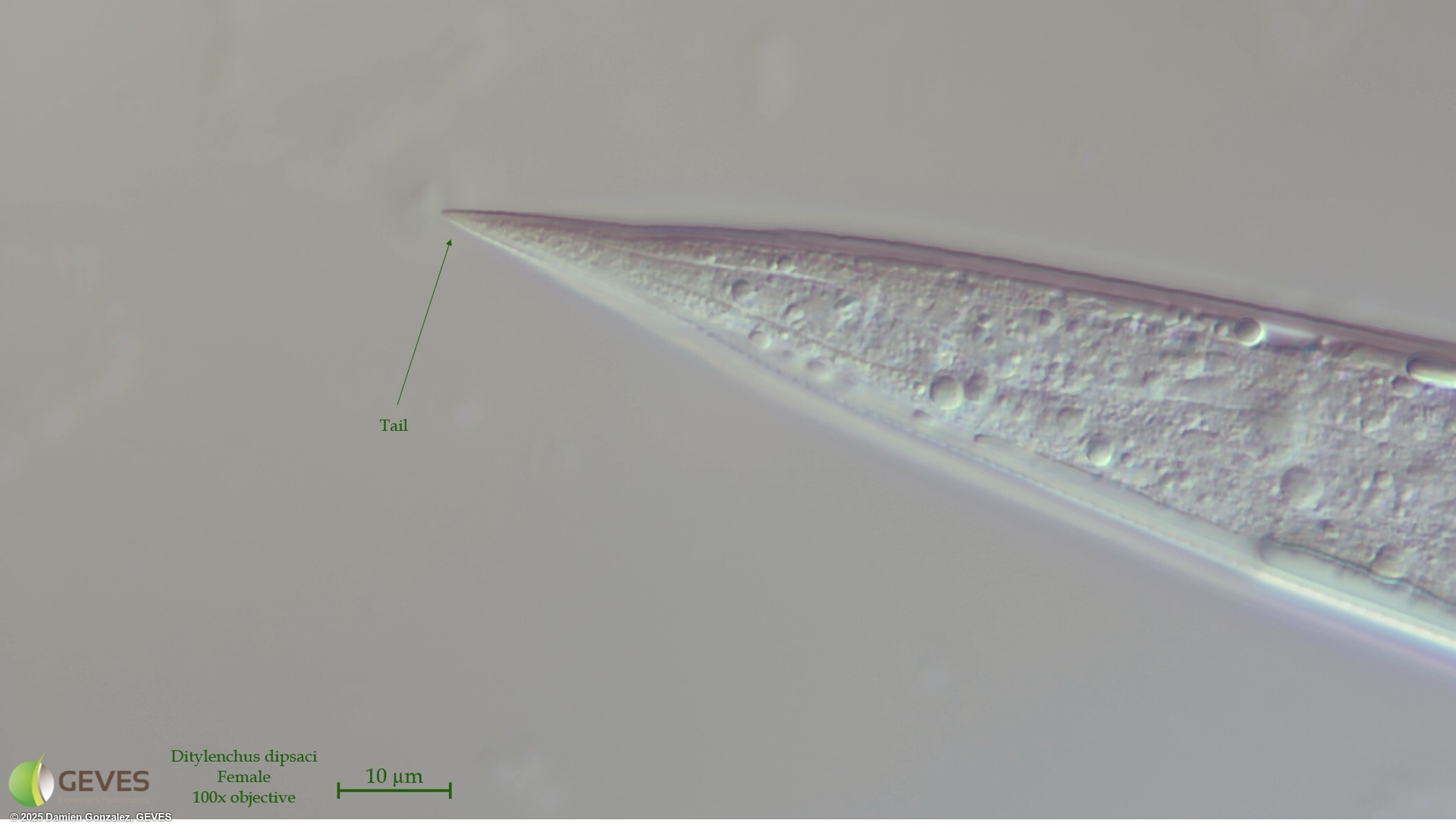
Ditylenchus dipsaci on Medicago sativa
Image credits: Damien Gonzalez, FR
The general criteria and observations are indicated directly on the photos. Here is a comprehensive list of the main characteristics for Ditylenchus dipsaci: - Length in mm: 1.0-1.3 - Head shape: « Offset » : narrower than adjoining body with lip region flattened - Stylet length in µm: 10-12 - Nerve ring behind the muscular median bulb - Excretory pore behind the nerve ring - Length of the post-vulval sac : 50% of the distance between the vulva and the anus - Position of the vulva relative to the anterior end, expressed as a % of the body length in female: 80 - Number of lateral lines: 4 - Shape of tail: Conical and pointed
Ditylenchus dipsaci on Medicago sativa
Image credits: Damien Gonzalez, FR
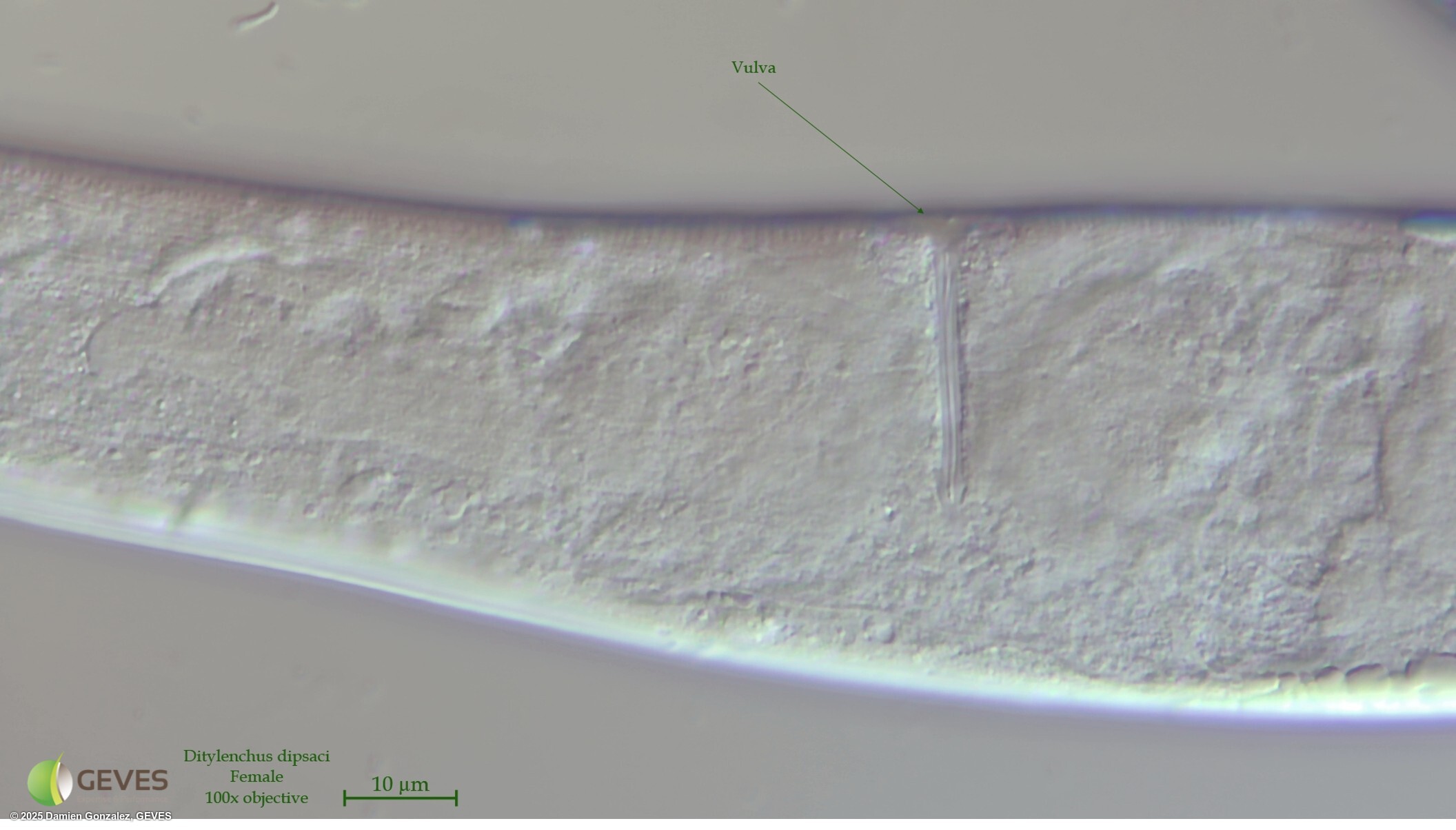
The general criteria and observations are indicated directly on the photos. Here is a comprehensive list of the main characteristics for Ditylenchus dipsaci: - Length in mm: 1.0-1.3 - Head shape: « Offset » : narrower than adjoining body with lip region flattened - Stylet length in µm: 10-12 - Nerve ring behind the muscular median bulb - Excretory pore behind the nerve ring - Length of the post-vulval sac : 50% of the distance between the vulva and the anus - Position of the vulva relative to the anterior end, expressed as a % of the body length in female: 80 - Number of lateral lines: 4 - Shape of tail: Conical and pointed
Ditylenchus dipsaci on Medicago sativa
Image credits: Damien Gonzalez, FR
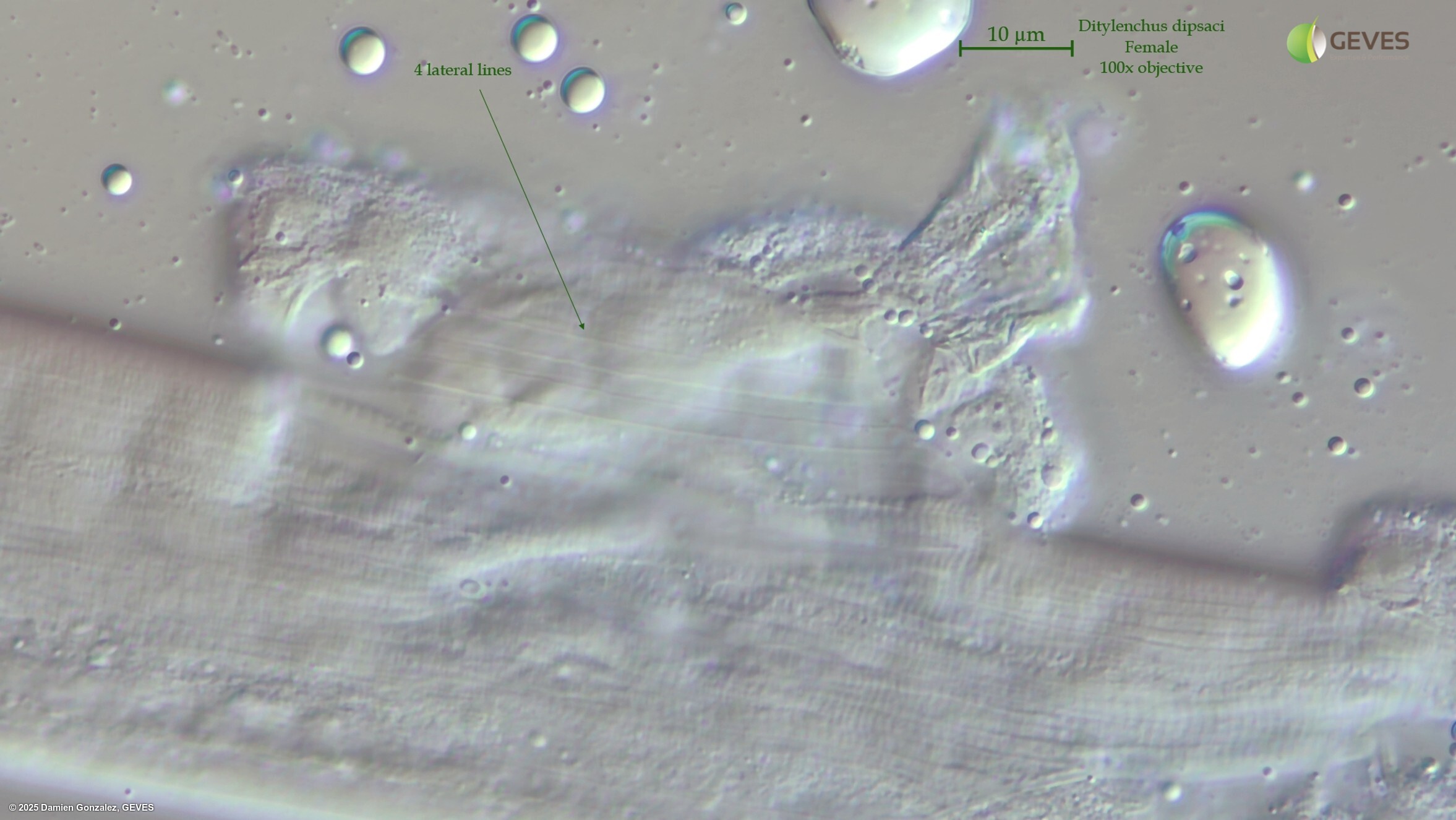
The general criteria and observations are indicated directly on the photos. Here is a comprehensive list of the main characteristics for Ditylenchus dipsaci: - Length in mm: 1.0-1.3 - Head shape: « Offset » : narrower than adjoining body with lip region flattened - Stylet length in µm: 10-12 - Nerve ring behind the muscular median bulb - Excretory pore behind the nerve ring - Length of the post-vulval sac : 50% of the distance between the vulva and the anus - Position of the vulva relative to the anterior end, expressed as a % of the body length in female: 80 - Number of lateral lines: 4 - Shape of tail: Conical and pointed