Alternaria linicola on Linum usitassimum
Image credits: GEVES, FR
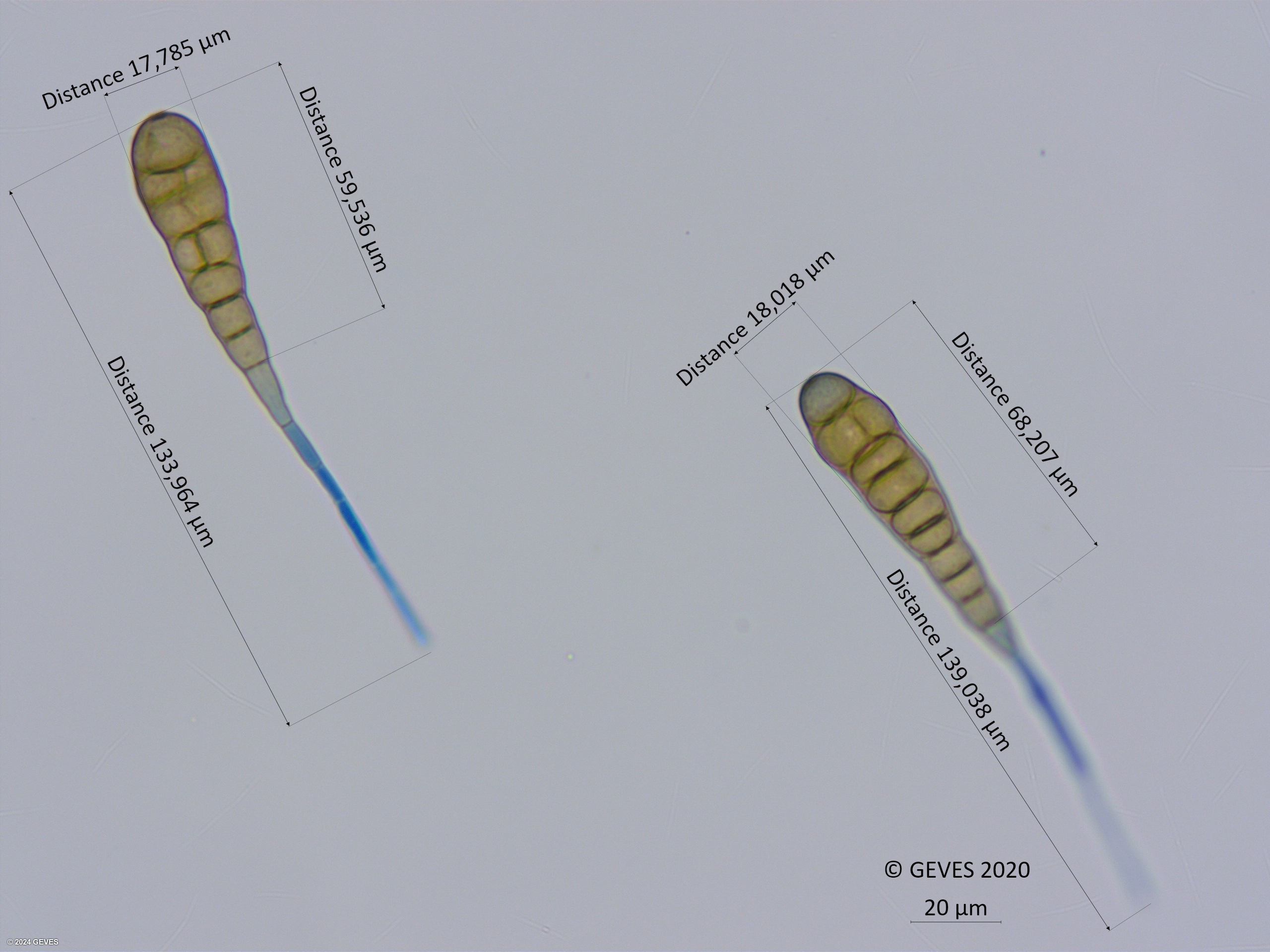
Conidia of A. linicola; smooth walled, olive-brown, elongated conical to ellipsoid or obclavate, gradually taping towards beak. Beak is long, occasionally branched, muriform with transverse septa and occasionally 1-4 longitudinal septa.
Alternaria linicola on Linum usitassimum
Image credits: Angela Thüringer, SE
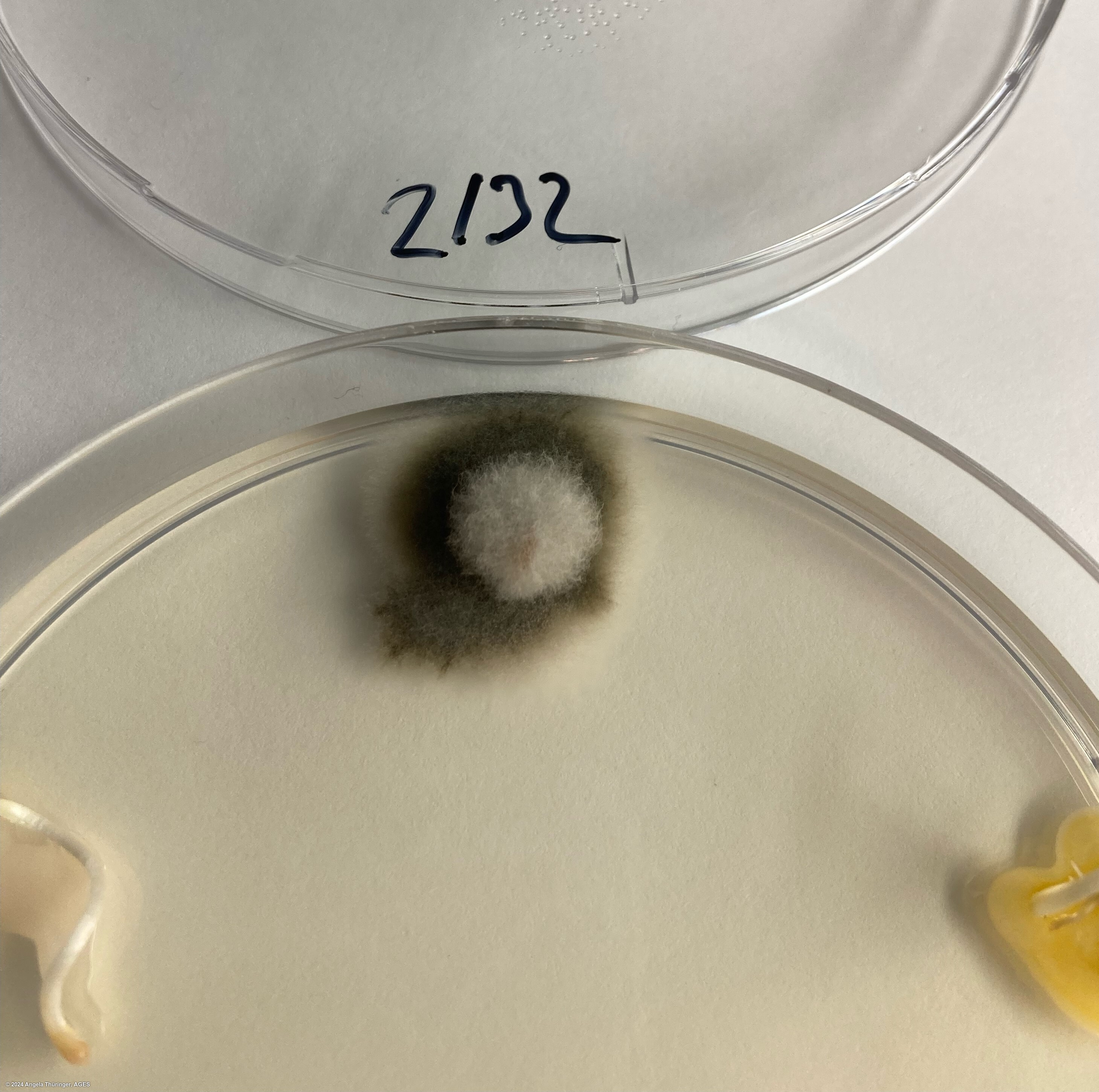
Alternaria linicola forms small and circular olivegreen to grey colonies. The bottom of the colonies appear dark.
growth time: 9 days | temperature: 20 +/-2C | lighting: darkness | plate size: 90mm | agar: PDA ( Merck) |
DNA testing: Result confirmed by PCR
Alternaria linicola on Linum usitassimum
Image credits: Angela Thüringer, SE
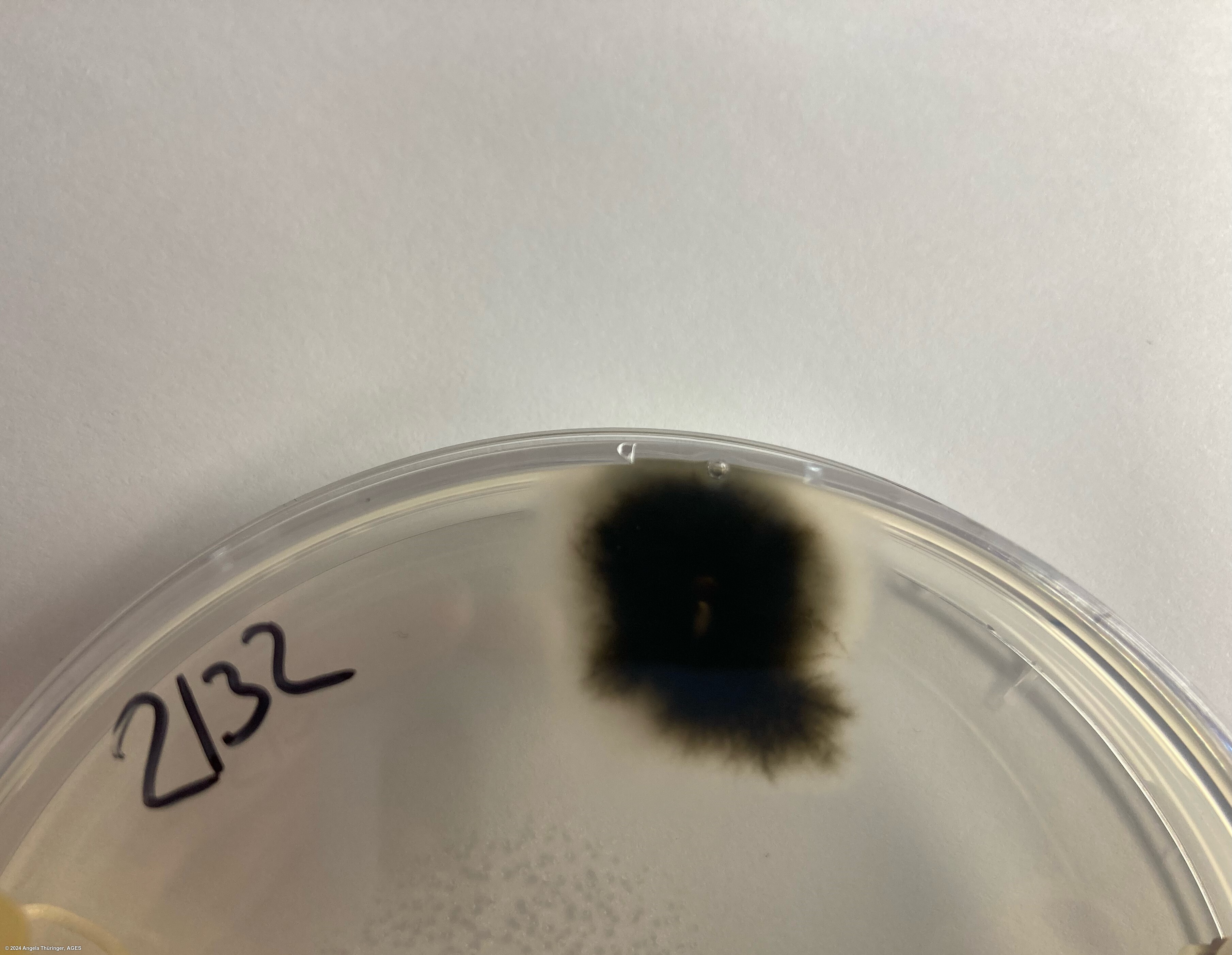
Alternaria linicola forms small and circular olivegreen to grey colonies. The bottom of the colonies appear dark.
growth time: 9 days | temperature: 20 +/-2C | lighting: darkness | plate size: 90mm | agar: PDA ( Merck) |
DNA testing: Result confirmed by PCR
Alternaria linicola on Linum usitassimum
Image credits: Angela Thüringer, SE
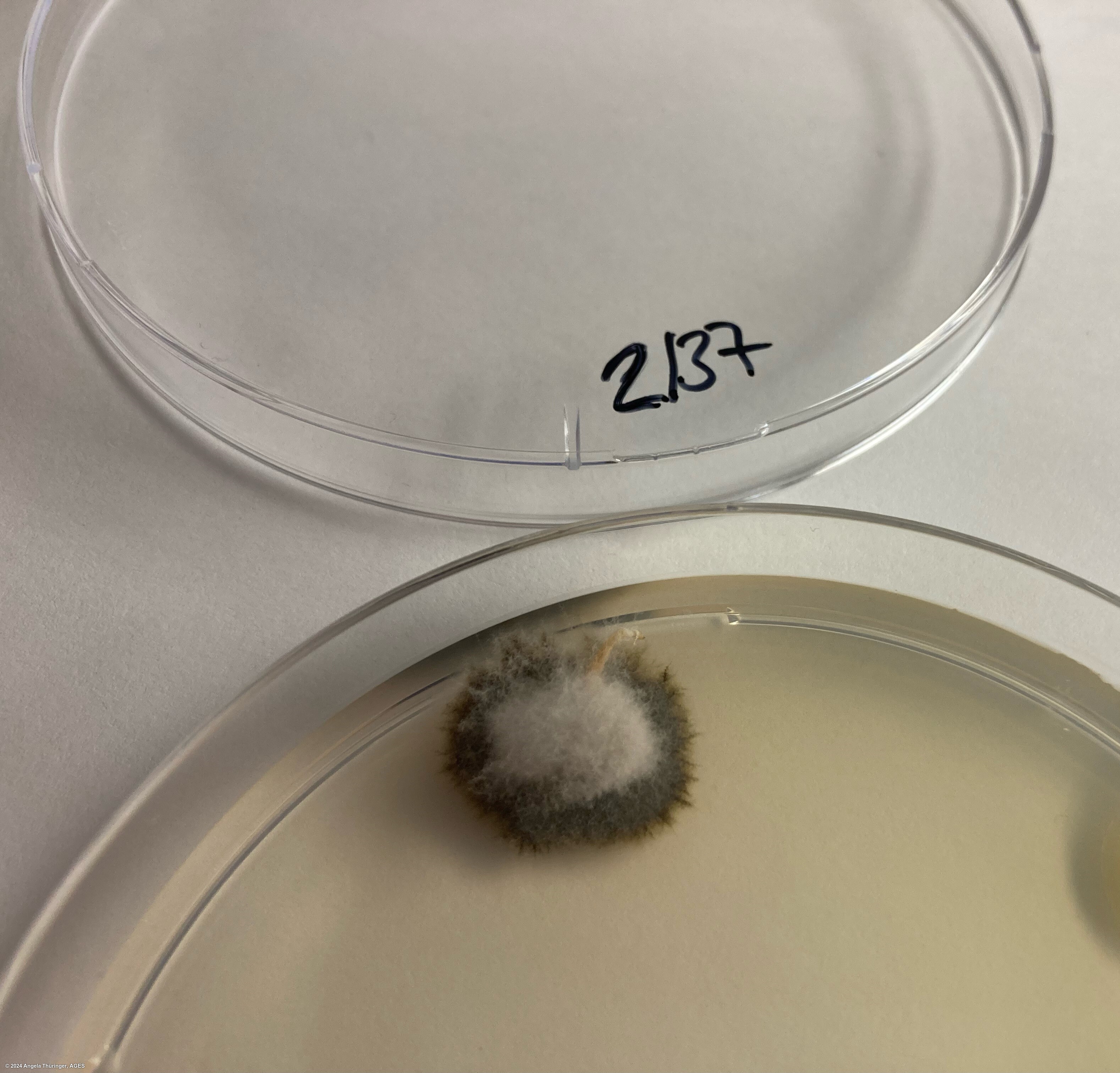
Alternaria linicola forms small and circular olivegreen to grey colonies. The bottom of the colonies appear dark.
growth time: 9 days | temperature: 20 +/-2C | lighting: darkness | plate size: 90mm | agar: PDA ( Merck) |
DNA testing: Result confirmed by PCR
Alternaria linicola on Linum usitassimum
Image credits: Angela Thüringer, SE
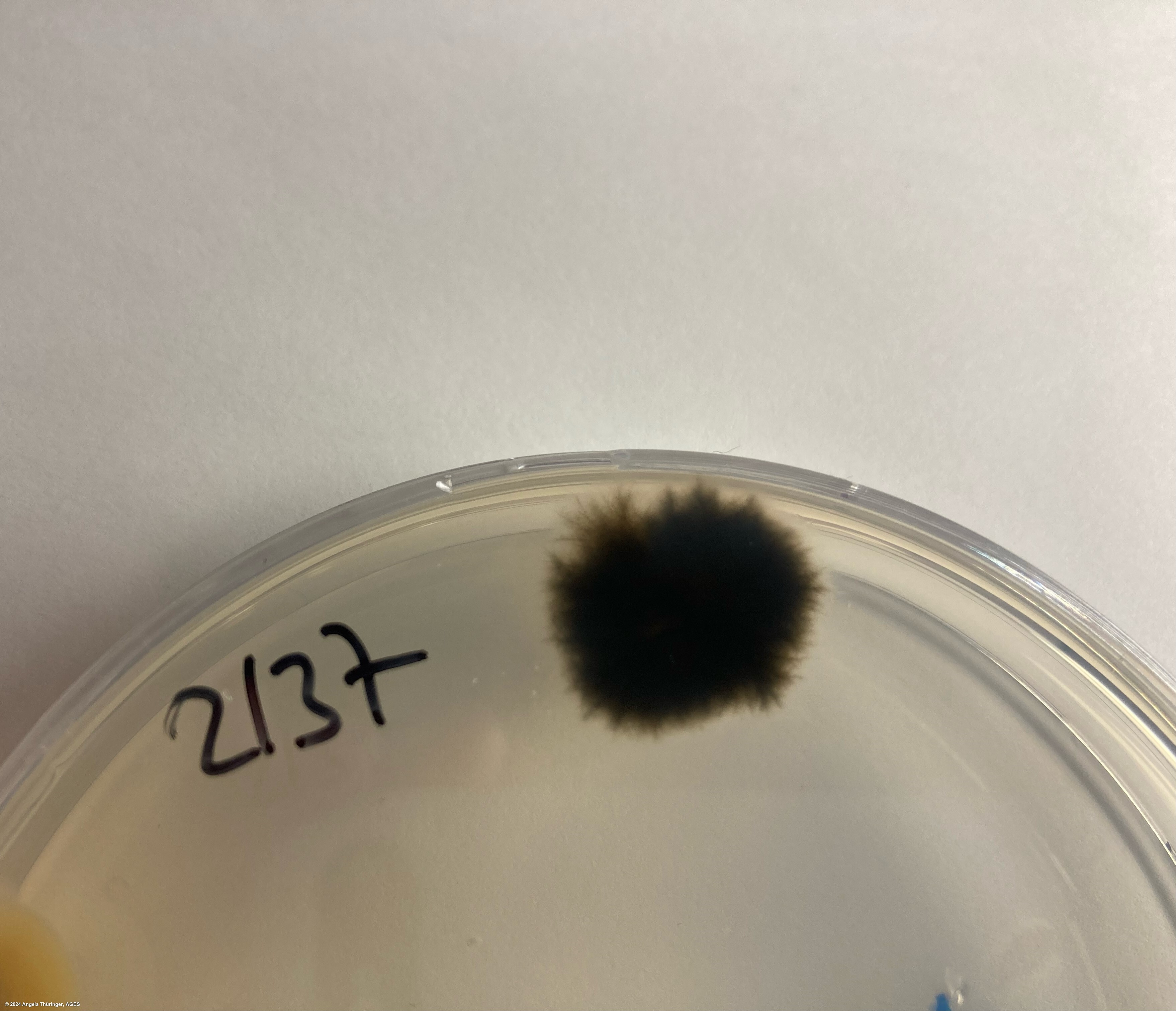
Alternaria linicola forms small and circular olivegreen to grey colonies. The bottom of the colonies appear dark.
growth time: 9 days | temperature: 20 +/-2C | lighting: darkness | plate size: 90mm | agar: PDA ( Merck) |
DNA testing: Result confirmed by PCR
Alternaria linicola on Linum usitassimum
Image credits: Céline Le Guisquet, FR
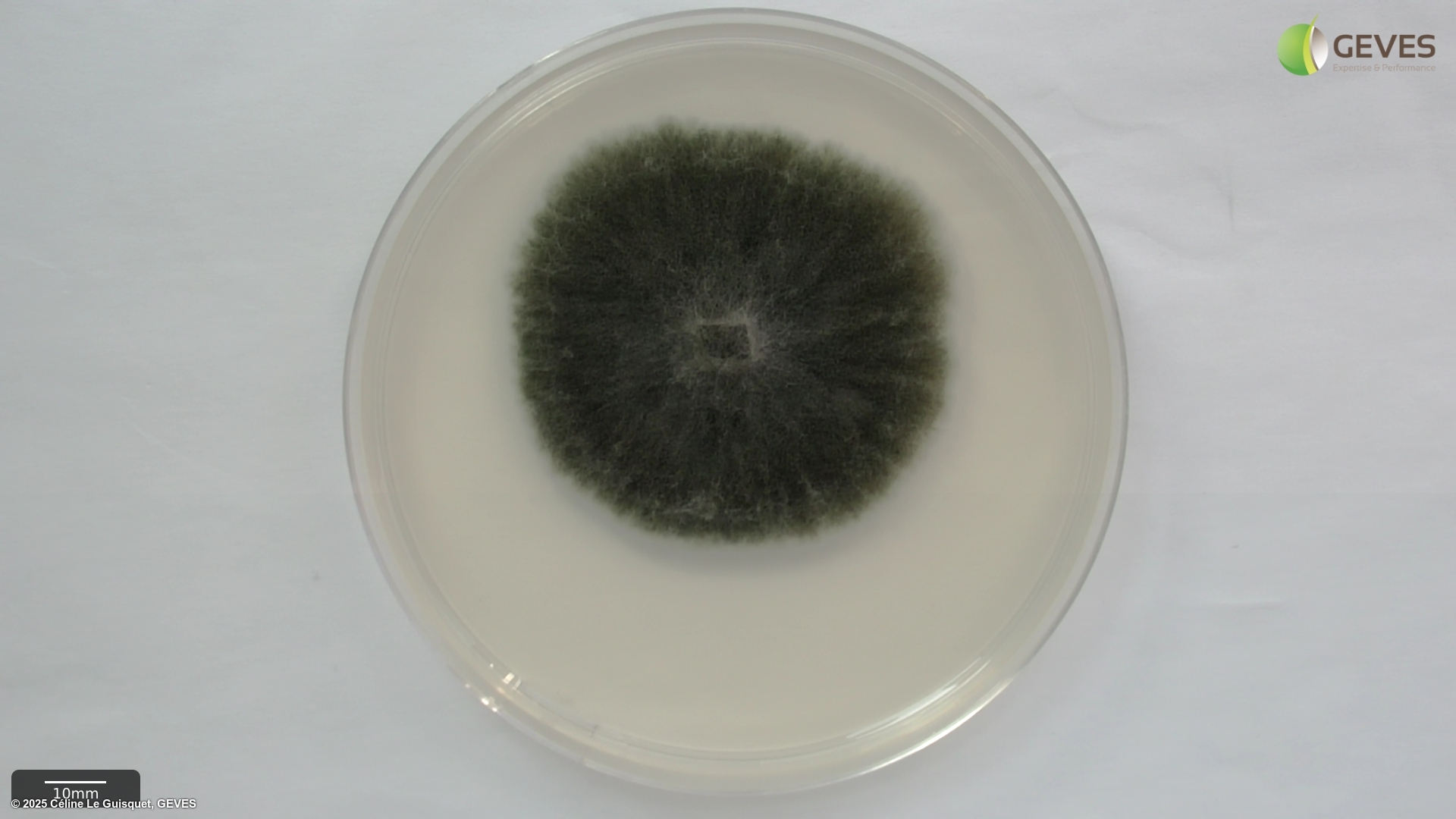
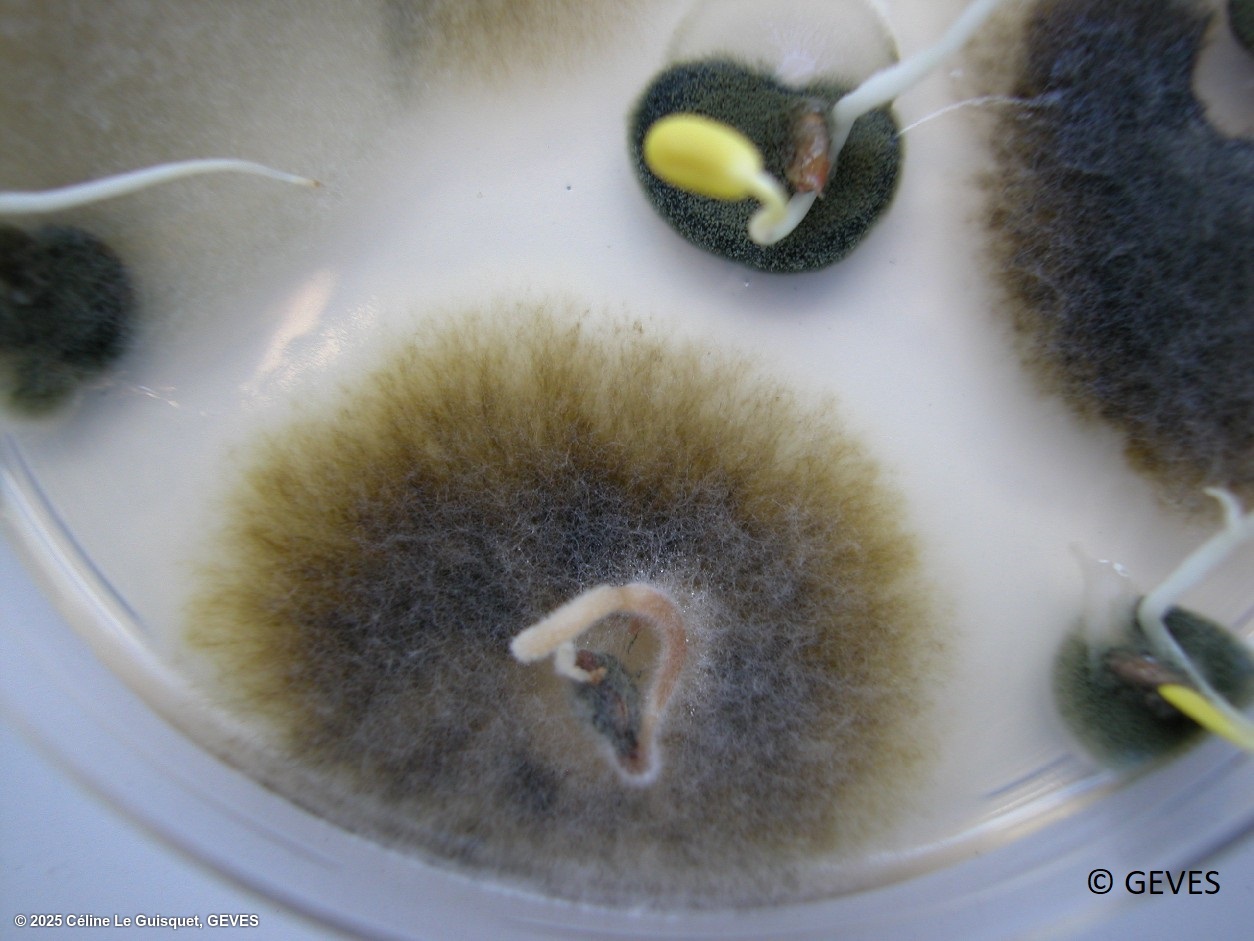
Mycelium of Alternaria linicola. Mycelium shape : Dense and septate. Mycelium color : Green-grey to olive-grey. Conidia : Single, olive-brown, smooth walled, gradually tapering towards the beak, occasionally branched. Conidia Size : 20 – 130 x 17 – 24 µm. Beak size : 16 – 230 x 3 – 4.5 µm.
sterilisation: Not disinfested seeds | growth time: 10 days | temperature: 20°C | lighting: Dark | agar: Malt Agar ( )
Alternaria linicola on Linum usitassimum
Image credits: Céline Le Guisquet, FR
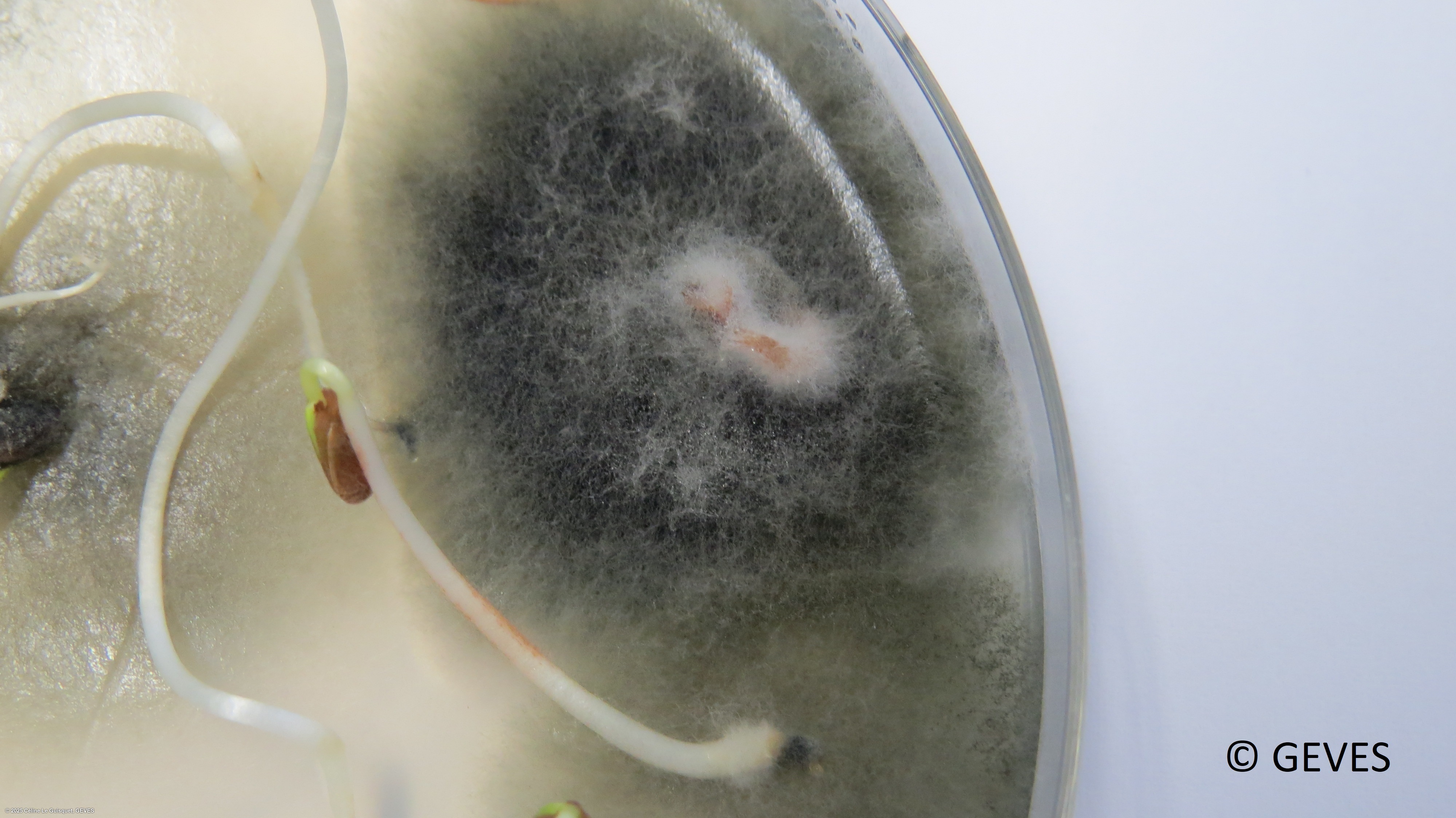
Mycelium of Alternaria linicola. Mycelium shape : Dense and septate. Mycelium color : Green-grey to olive-grey. Conidia : Single, olive-brown, smooth walled, gradually tapering towards the beak, occasionally branched. Conidia Size : 20 – 130 x 17 – 24 µm. Beak size : 16 – 230 x 3 – 4.5 µm.
sterilisation: Not disinfested seeds | growth time: 10 days | temperature: 20°C | lighting: Dark | agar: Malt Agar ( )
Alternaria linicola on Linum usitassimum
Image credits: Céline Le Guisquet, FR
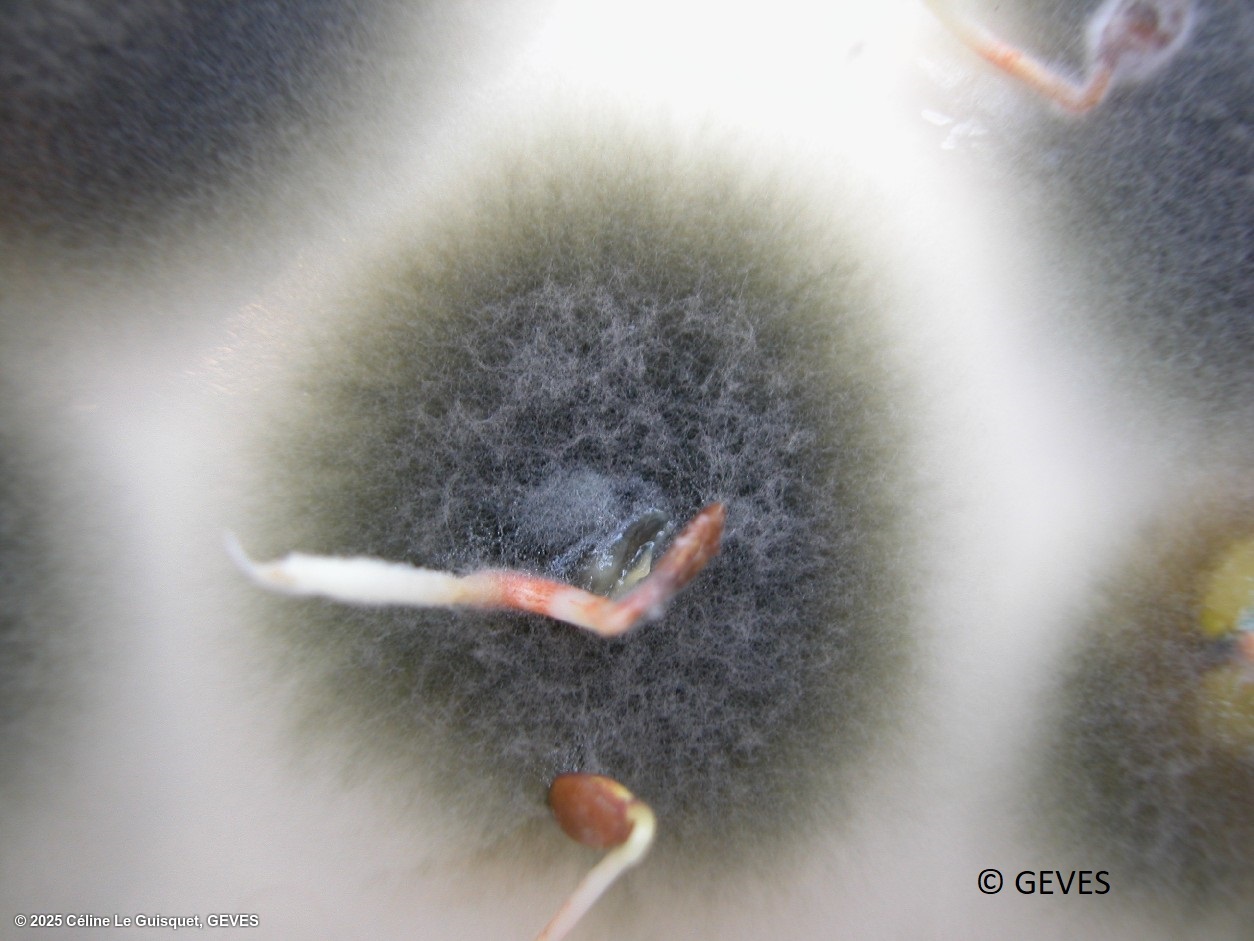
Mycelium of Alternaria linicola. Mycelium shape : Dense and septate. Mycelium color : Green-grey to olive-grey. Conidia : Single, olive-brown, smooth walled, gradually tapering towards the beak, occasionally branched. Conidia Size : 20 – 130 x 17 – 24 µm. Beak size : 16 – 230 x 3 – 4.5 µm.
sterilisation: Not disinfested seeds | growth time: 10 days | temperature: 20°C | lighting: Dark | agar: Malt Agar ( )
Alternaria linicola on Linum usitassimum
Image credits: Céline Le Guisquet, FR
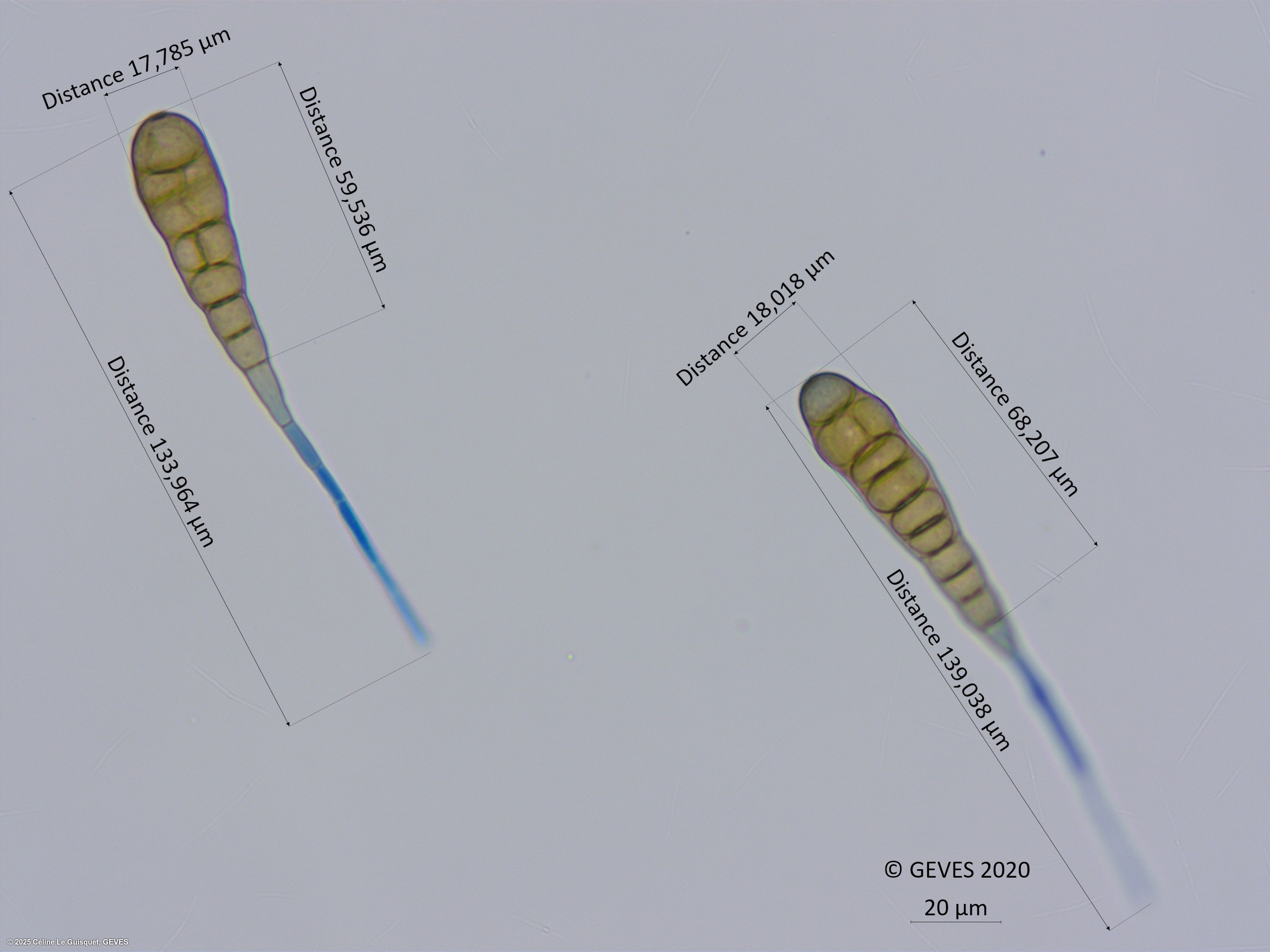
Mycelium of Alternaria linicola. Mycelium shape : Dense and septate. Mycelium color : Green-grey to olive-grey. Conidia : Single, olive-brown, smooth walled, gradually tapering towards the beak, occasionally branched. Conidia Size : 20 – 130 x 17 – 24 µm. Beak size : 16 – 230 x 3 – 4.5 µm.
sterilisation: Not disinfested seeds | growth time: 10 days | temperature: 20°C | lighting: Dark | agar: Malt Agar ( )